A Safer Step-by-Step Routine for Grooming Your Dog at Home

Groomingdales guide

A Safer Step-by-Step Routine for Grooming Your Dog at Home

Help dog owners build a calm, repeatable home-grooming routine and recognize when professional or veterinary care is safer.

Published August 21, 2026

Grooming at home works best when you treat it as a chain of brief, manageable tasks instead of one marathon session. A calm corner, solid footing, and every supply already laid out removes the chaos that makes dogs anxious and slows you down.

From start to finish, the routine follows a predictable path: examine the skin and coat, detangle first, bathe sparingly, dry thoroughly, then address nails, ears, teeth, and any light trimming the dog can handle. The coat texture, age, flexibility, and stress cues all factor into deciding which steps stay home and which get handed to a professional.

Dog Grooming Steps for Dummies

The ultimate “dog grooming for beginners” steps to successful dog grooming sessions. Whether you are grooming a poodle, ...

  • Channel: Go Groomer

Video source: Go Groomer

Quick read

Key takeaways

  • Build the grooming routine around the jobs that most often cause discomfort or buildup, not around a perfect all-at-once schedule.
  • Use tools that are gentle enough to repeat regularly and simple enough to keep within reach.
  • When a basic home routine stops working, treat that as a clue to inspect the skin, coat, or nails more closely instead of cleaning harder.

Pick a low-traffic room where you can control noise and keep other animals separated. Good lighting matters because you need to see through the fur to the skin, and ventilation helps everyone stay comfortable during longer sessions.

Lay down a rubber mat on the floor or inside the tub so paws don't slide. Arrange tools within arm's reach — you should never have to turn your back or step away while the dog is positioned. Everything listed below should be ready before the coat gets touched: a brush matched to the coat type, a metal comb, a dog-safe nail trimmer or grinder, absorbent towels, a blow dryer if the animal tolerates it, a toothbrush paired with veterinary-approved dog toothpaste, and ear-cleaning supplies only after a veterinarian has given the green light.

Spend time acquainting the dog with your supplies in short, positive interactions. Let the animal investigate each tool while you offer treats and gentle praise. Gently lift paws, touch the ears, and open the mouth during these practice moments. Warning signs like lip-licking, sudden stiffness, trying to slip away, or frantic pacing mean you should pause and resume later.

  • Line the floor or tub with a non-slip mat for secure footing.
  • Stage all tools, treats, and towels within easy reach before beginning.
  • Choose a well-lit room where you can clearly see the skin beneath the fur.
  • Never leave the dog unattended on any elevated surface or in a filled tub.
A Safer Step-by-Step Routine for Grooming Your Dog at Home

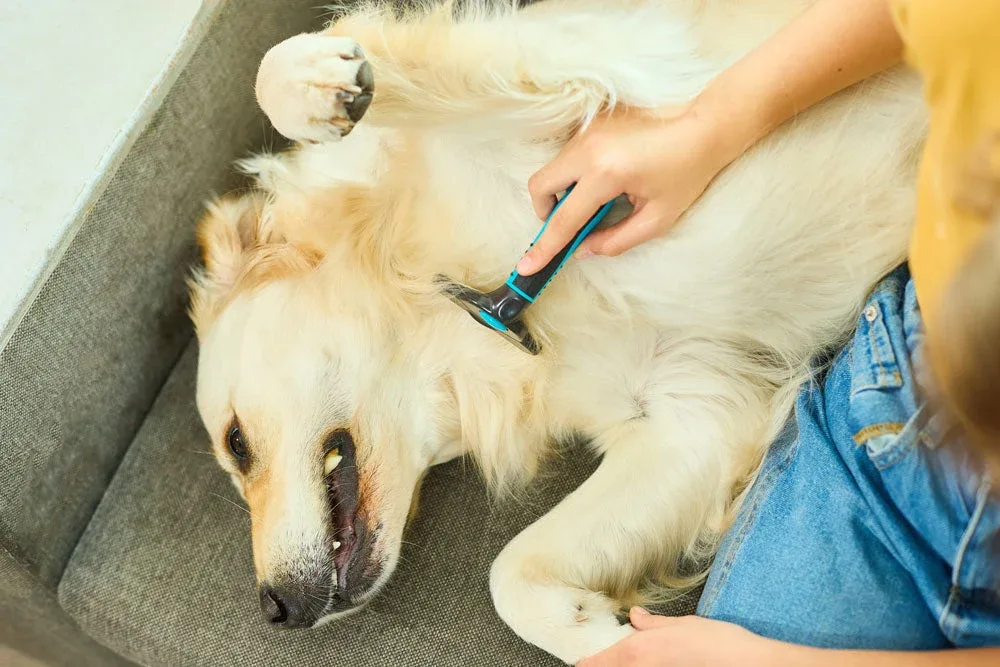
Removing loose hair, dirt, and small snarls while the coat is dry prevents tangles from locking tighter once wet. A rubber curry brush glides well across most short, smooth coats, whereas a slicker brush better addresses medium-length fur. Long or curly coats benefit from sectioning the hair and working small rows at a time, occasionally using a light mist of canine detangler when resistance appears.

Always brush in the direction the hair naturally grows, applying just enough pressure to glide through without pressing hard into the skin. For longer coats, lift a single row, brush beneath it, then move systematically from the feet upward. Even a gentle brush can cause redness or abrasion if you drag it repeatedly over the same spot.

Confirm each section with a metal comb after brushing. When the comb catches, go back and work out the remaining tangles gently instead of yanking. Never attempt to cut a mat with scissors while the skin is tucked underneath — tight mats pressed against the body carry a serious risk of accidental cuts and should be removed by a trained groomer using proper techniques.

Matching the brush to coat depth matters as much as the brushing motion itself. Short bristle length works for smooth coats, while longer tines are needed for medium and long hair to reach through to the undercoat without skimming the surface.

  • Start with a rubber curry brush for short, smooth coats.
  • Select a slicker brush with tines appropriate for medium or long hair depth.
  • Verify every brushed area with a metal comb before moving on.
  • Leave tight, skin-close mats for a professional groomer rather than using scissors.
A Safer Step-by-Step Routine for Grooming Your Dog at Home
Sponsored

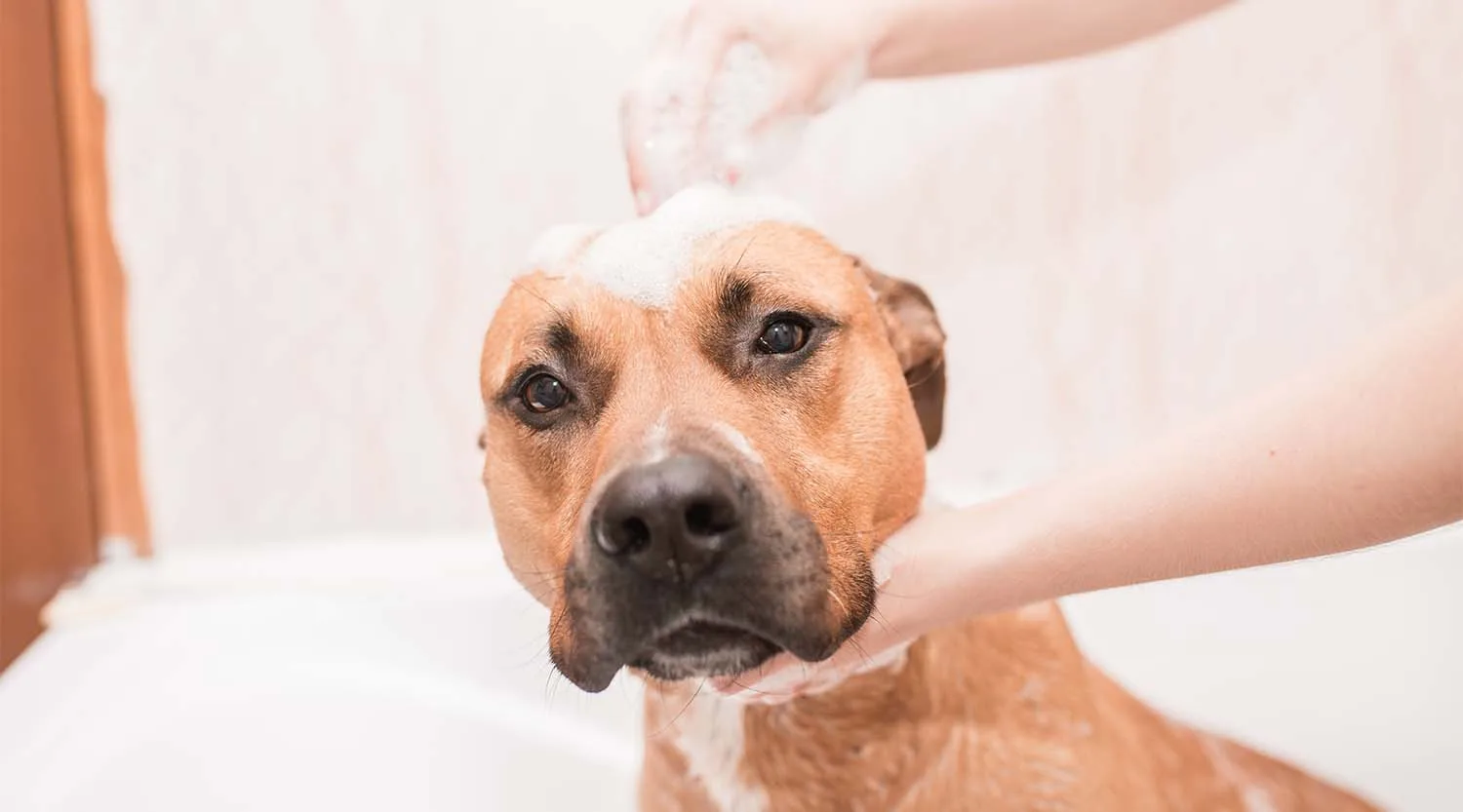
Water should be lukewarm, and shampoo must be formulated specifically for dogs. Apply from the rear end forward, shielding the eyes and keeping suds away from the inner ears at all times.

Rinsing thoroughly matters more than most owners realize. Run your fingers through the dense hair to separate it, then continue rinsing until the coat no longer feels slick. Shampoo left behind — particularly around the chest, belly, leg joints, and undercoat — irritates the skin. Bathing frequency depends heavily on coat type, skin condition, activity level, and any underlying health issues, so a veterinarian or groomer should establish the right interval for individual dogs.

Remove excess water by pressing with thick towels rather than rubbing, which drives tangles deeper into the coat. If the dog accepts a blow dryer, set it to cool air and keep the nozzle moving constantly. Hot air risks burns and the anxiety that comes with it. The skin and full undercoat must be completely dry before you brush again or run clippers through the fur; damp hair hides skin irritation and clips unevenly, which creates an unsafe grooming result.

Always remove loose hair and small tangles before the bath begins. Wetting pre-existing mats locks them tighter against the body and makes removal far more difficult.

  • Detangle the coat fully before any water touches the fur.
  • Use lukewarm water and shampoo formulated for dogs only.
  • Pay special attention to rinsing the belly, legs, chest, and dense undercoat.
  • Press with towels first, then use only cool, moving air to finish drying.
A Safer Step-by-Step Routine for Grooming Your Dog at Home

Nail length should be checked about once a month. Hold the paw firmly but gently, press the pad to extend the nail, and trim a thin slice at a time along the natural angle. Dewclaws often go unnoticed but still require regular attention since they rarely wear down during normal walks. If your dog resists handling or you cannot identify the quick safely, transfer the trim to a groomer or veterinary team.

Daily toothbrushing is the gold standard, even if only a few seconds count at first. Make mouth touching routine, let the dog explore the brush and toothpaste on its own, then work in small circles along the gumline. Human toothpaste contains ingredients that are unsafe for dogs and must never be used.

Ear cleaning belongs in the hands of a veterinarian when problems exist. Odor, heavy wax buildup, frequent head shaking, or persistent pawing at the ears point to inflammation or infection, not simple dirt. Attempting to clean an already painful ear will worsen the condition. Use cotton balls or gauze only at the visible opening of the ear canal — never insert anything deep inside.

Keep each task manageable by separating them rather than tackling all three during one exhausting session. Short, frequent dental brushings beat one long forced session every few days.

  • Trim nails monthly and never skip the dewclaws.
  • Brush teeth daily using dog-specific toothpaste for a few seconds at a time.
  • Seek veterinary advice before cleaning an ear that smells or seems painful.
  • Limit cotton and gauze to the outer ear opening only.

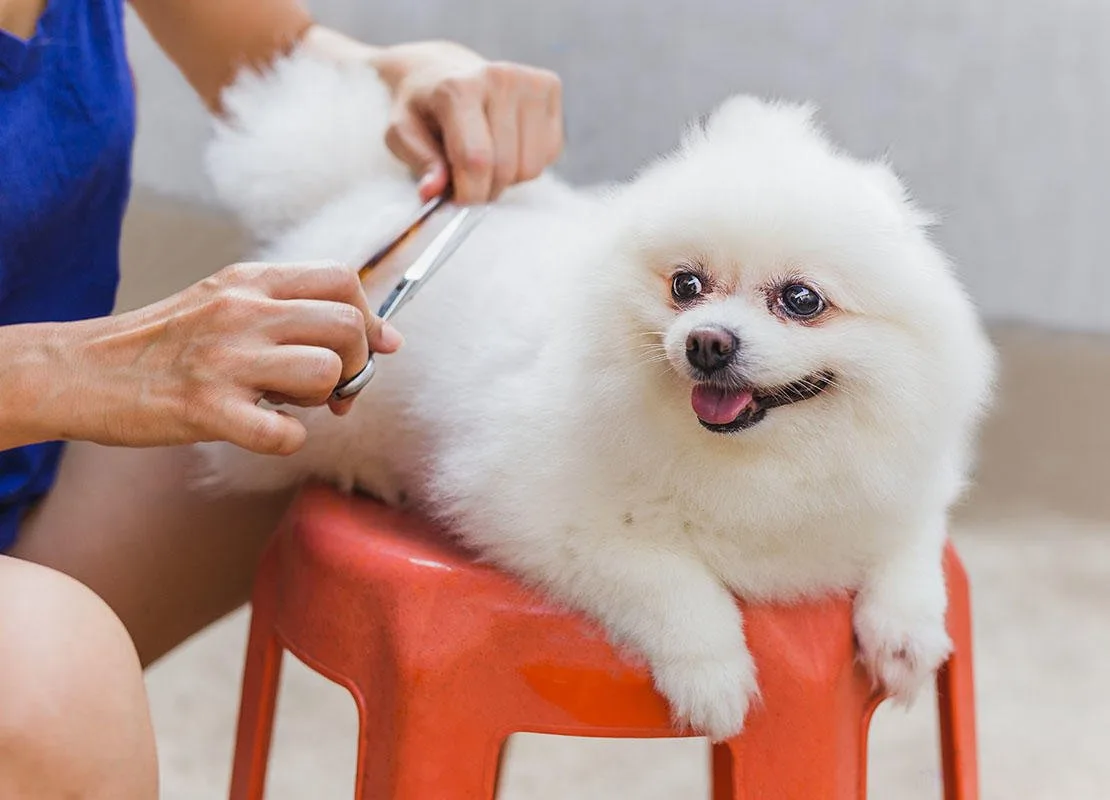
Clippers and scissors introduce real risk that brushing does not. Before any blade meets the coat, verify that the fur is clean, completely dry, thoroughly brushed, and confirmed smooth with a metal comb. Long, steady strokes following the direction of hair growth deliver cleaner results than quick chopping motions.

Blind cutting through a mat or a skin fold is the fastest way to injure a dog. Areas around the face, ears, belly, armpits, and sanitary region contain thin, highly mobile skin that shifts the moment a blade approaches. If you cannot see exactly where the clippers or scissors will travel, stop immediately.

Most owners can maintain the coat between professional visits without performing a full haircut. Breed-specific styling, extensive clipping work, deeply matted coats, and dogs that react fearfully to tool noise are far safer under the care of an experienced groomer who understands proper handling and cutting length.

  • Clip only after washing, drying, brushing, and combing the coat completely.
  • Always move the clippers in the direction of natural hair growth.
  • Keep blades away from any area where the skin is not clearly visible.
  • Reserve breed cuts and heavy mat removal for a professional groomer.

Every grooming session offers a chance to examine areas owners commonly miss. Make it a habit to look and feel under the chest, inside the hind and front legs, around the paws, and beneath the tail at least every four to six weeks. Watch for redness, parasites, new or changing lumps, sore spots, or sudden sensitivity to touch.

Certain situations demand professional hands rather than persistence at home. Severe matting, complex breed coats requiring detailed maintenance, significant behavioral reactivity, senior dogs with mobility limitations, and animals living with arthritis or chronic skin conditions all benefit from a groomer's expertise. A shorter, gentler professional visit often proves kinder than forcing a difficult session at home.

Stop grooming and contact a veterinarian immediately if you discover broken or inflamed skin, any suspicious or evolving lump, visible parasites, ear discharge or strong odor, obvious pain, or an abrupt shift in behavior during handling. Do not cover the problem area with shampoo, fragrance products, or additional brushing before the examination.

  • Examine hidden skin zones every four to six weeks for abnormalities.
  • Pause the session immediately if the dog shows pain, panic, or sudden sensitivity.
  • Defer to a groomer for severe mats, complex coat types, or strong reactivity.
  • Consult a veterinarian for inflamed skin, evolving lumps, parasites, ear discharge, or pain.

FAQ

Frequently asked questions

How often should I groom my dog at home?

Tailor the schedule to your dog's coat, skin, and overall health. Brush frequently enough to stop tangles from forming, trim nails roughly once a month, brush teeth daily whenever you can, and inspect hidden skin every four to six weeks. Have a veterinarian or groomer determine the right bathing and ear-cleaning cadence for your individual dog. On A Safer Step-by-Step Routine for Grooming Your Dog at Home, that timing works best when you act before buildup becomes obvious.

What is the safest way to dry a dog after a bath?

Squeeze moisture out with thick absorbent towels instead of rubbing. If the dog accepts a blow dryer, switch to a cool setting, keep the airflow constantly moving, and ensure both the topcoat and undercoat are fully dry before brushing or clipping again. That keeps A Safer Step-by-Step Routine for Grooming Your Dog at Home tied to a real home-care routine instead of guesswork.

Can I cut a mat out with scissors?

Not when the skin sits underneath or the mat lies flat against the body. Dog skin easily folds upward into a mat and can be sliced before you notice. Close, tight, or extensive matting should always be handled by a professional groomer using safe removal methods. For A Safer Step-by-Step Routine for Grooming Your Dog at Home, the safer version is usually the one that leaves less cleanup and less stress afterward.

When should grooming concerns go to a veterinarian?

Schedule a veterinary visit before continuing any grooming when you find inflamed or broken skin, a new or changing lump, parasites, ear odor or discharge, clear signs of pain, or sudden behavior shifts. Ear symptoms often signal infection, and attempting to clean an irritated ear can make the problem significantly worse. On A Safer Step-by-Step Routine for Grooming Your Dog at Home, that timing works best when you act before buildup becomes obvious.

Sponsored