Dangers of Dog Grooming Restraints — What Dog Owners Need to Know

Groomingdales guide

Dangers of Dog Grooming Restraints — What Dog Owners Need to Know

Help visitors handle Dangers of Dog Grooming Restraints — What Dog Owners Need to Know with a clear, practical checklist grounded in real examples.

Published July 14, 2026

While many groomers use restraints to maintain control and prevent bites, common grooming devices like double-head loops and belly bands can pose severe risks to canine safety. These tools often induce intense stress, pain, and discomfort, and in extreme cases, can lead to fatal outcomes. It is crucial for pet owners to understand these dangers to ensure their dogs receive humane care.

This guide breaks down the specific hazards associated with popular grooming restraints, helping you evaluate salon practices and advocate for safer, low-stress handling methods for your dog.

When to STOP Grooming a Dog | Stress, Safety & Red Flags Explained

In this episode of The Grooming By Rudy Podcast, we tackle one of the most important — and often overlooked — topics in pet ...

  • Channel: The Grooming By Rudy Podcast

Video source: The Grooming By Rudy Podcast

Quick read

Key takeaways

  • Build the grooming routine around the jobs that most often cause discomfort or buildup, not around a perfect all-at-once schedule.
  • Use tools that are gentle enough to repeat regularly and simple enough to keep within reach.
  • When a basic home routine stops working, treat that as a clue to inspect the skin, coat, or nails more closely instead of cleaning harder.

The core issue lies in the balance between control and welfare. While groomers intend to keep dogs safe from bites, the use of restrictive equipment often exacerbates anxiety. At Hippie Hounds, we prioritize treating dogs with respect, minimizing restraint usage to preserve their comfort and trust throughout the grooming process.

Unfortunately, not all professionals feel confident managing high-stress dogs without mechanical aids. This gap has led to the creation of various restraint tools. While invented with innocent intentions, these devices can have dire consequences when used improperly or on dogs already in a state of distress.

  • Recognize that the primary goal of any groomer should be the emotional and physical safety of the animal.
  • Understand that relying on heavy restraint often indicates a lack of confidence in handling techniques rather than a necessity for safety.
  • Be aware that 'teamwork' between groomer and handler is a safer alternative to mechanical restriction.
Dangers of Dog Grooming Restraints — What Dog Owners Need to Know

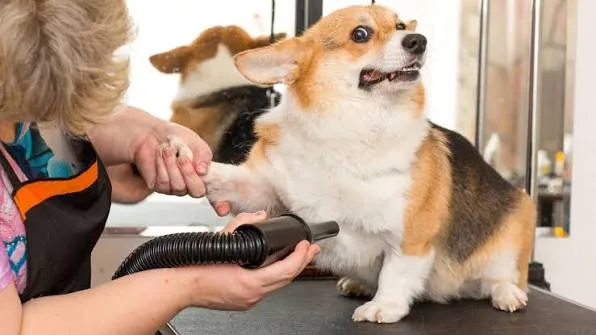
To assess danger, one must understand the dog’s behavior. When frightened, dogs exhibit one of four stress responses: Fight, Flight, Freeze, or Fawn. Each reaction carries different risks when combined with physical restraint.

"Fight" responses involve biting and scratching. "Flight" responses see dogs attempting to jump off tables or out of tubs. "Freeze" responses involve shrinking and curling up, which can hide signs of pain or injury. "Fawn" responses include appeasement licking or submissive urination. Recognizing these cues allows for better intervention.

  • Identify the specific behavioral signs your dog exhibits under stress.
  • Look for subtle indicators of fear that might be missed if the dog is physically restricted.
  • Evaluate whether the groomer is responding to these signs with patience or force.
Dangers of Dog Grooming Restraints — What Dog Owners Need to Know
Sponsored

Adding layers of restraint—such as belly bands or neck loops—often triggers a stronger stress response. When a dog feels trapped, their instinct to escape or defend themselves intensifies, increasing the likelihood of injury to both the dog and the staff.

At Hippie Hounds, we have banned potentially unsafe restraints precisely to mitigate these risks. Our policy reflects a commitment to safety through skill, not suppression. We believe in operating as a team, using human support to manage the dog naturally rather than mechanically.

  • Note that more restrictions typically equal higher anxiety levels.
  • Understand that physical containment does not resolve the underlying fear causing aggressive behavior.
  • Prioritize salons that explain their handling philosophy clearly and transparently.
Dangers of Dog Grooming Restraints — What Dog Owners Need to Know

Instead of complex restraint systems, safe grooming relies on proper technique and environmental management. At Hippie Hounds, we utilize minimal, safe equipment such as standard grooming loops secured gently around the head, or cross-body loops for sensitive dogs. In delicate cases, we use specialized harnesses like the 'Trach Saver' that distribute pressure safely.

We also employ a 'helper' system. Rather than restraining the dog, a second person holds and comforts the animal, allowing the groomer to focus on the task. This approach builds trust and reduces the need for forceful control.

  • Ask groomers about their specific restraint policies before booking.
  • Ensure that any loop or harness used is adjustable and non-chafing.
  • Verify if the salon uses a 'helper' for anxious dogs instead of mechanical restraints.

Be vigilant for signs that a groomer is prioritizing speed or convenience over welfare. If a groomer claims they 'cannot control' a dog without heavy restraints, this is a significant red flag. Confidence comes from handling skills, not hardware.

Safe grooming environments allow for movement and communication. If a dog is immobilized to the point of distress, the procedure may be unsafe. We look for groomers who can read body language and adjust their approach accordingly.

  • Reject any facility that insists on excessive restraint as standard practice.
  • Watch for groomers who ignore signs of freezing or panic.
  • Ensure that breaks are taken if the dog shows sustained signs of fear.

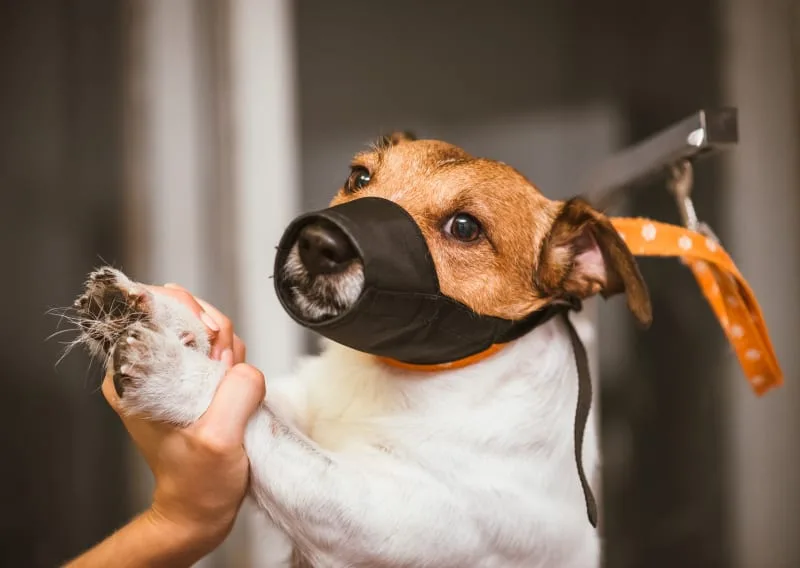
Ultimately, safety in grooming is about mental well-being as much as physical protection. Biting is often a last resort for a dog that feels cornered. By using soft muzzles only when absolutely necessary, or bite gloves for protection without confinement, we can maintain safety without inducing trauma.

Remember that dogs communicate through behavior. A firm but gentle approach that respects their boundaries is far more effective and humane than mechanical restriction. Choose groomers who view your dog as a partner in the process, not an obstacle to be managed.

  • Support businesses that publish clear, humane restraint policies.
  • Encourage open dialogue between owners and groomers about their dog's specific fears.
  • Recognize that a calm dog is a well-handled dog, regardless of coat length or breed.

FAQ

Frequently asked questions

What makes dog grooming restraints dangerous?

Restraints like belly bands or tight neck loops can cause choking, internal injury, and severe psychological stress. They often trap dogs in a 'fight or flight' response, leading to panic-induced injuries or aggression. That keeps dangers of dog grooming restraints what dog owners need to know tied to a real home-care routine instead of guesswork.

How can I tell if a groomer uses unsafe restraints?

Ask directly about their restraint policy. Reputable groomers will emphasize low-stress handling, minimal equipment, and the use of helpers or calming techniques rather than mechanical locking devices. For dangers of dog grooming restraints what dog owners need to know, the safer version is usually the one that leaves less cleanup and less stress afterward.

Is it ever okay to use a muzzle?

Muzzles can be safe if properly fitted and used temporarily for specific tasks, but they should not be used as a substitute for good handling. At Hippie Hounds, we prefer communication and trust-building over containment. That keeps dangers of dog grooming restraints what dog owners need to know tied to a real home-care routine instead of guesswork.

Sponsored