Dog Skin Care Through Grooming Baths and Coat Checks

Groomingdales guide

Dog Skin Care Through Grooming Baths and Coat Checks

Help owners protect dog skin during ordinary grooming by matching tools to coat type, bathing and rinsing carefully, drying fully, checking the skin, and recognizing problems that need a veterinarian.

Published August 17, 2026

Healthy skin is the real foundation of a dog's appearance, and consistent grooming is one of the most effective ways to protect it. The skin shields against infections, manages body temperature, and repairs itself—but only when maintained properly. A grooming session built around the dog's individual needs does far more than clean a coat; it keeps the barrier strong and gives you early warning signs of trouble.

What works well for one dog may harm another. Factors like age, coat texture, daily activity, and known allergies should shape every decision you make. Pick tools sized for the individual animal, bathe on a schedule that matches its lifestyle, and treat ongoing scratching, open sores, or unexplained lumps as potential medical issues rather than routine grooming concerns.

The Best Way to De-Shed Your Dog's Hair

Do not use dog shedding tools DO THIS INSTEAD! You will never look at dog de-shedding tools the same way after learning the ...

  • Channel: Go Groomer

Video source: Go Groomer

Quick read

Key takeaways

  • Build the grooming routine around the jobs that most often cause discomfort or buildup, not around a perfect all-at-once schedule.
  • Use tools that are gentle enough to repeat regularly and simple enough to keep within reach.
  • When a basic home routine stops working, treat that as a clue to inspect the skin, coat, or nails more closely instead of cleaning harder.

Begin by understanding the coat you are working with, not just the breed label. Smooth-coated dogs typically do well with a bristle brush that lifts away loose hair and spreads natural oils across the surface. Double-coated breeds benefit from an undercoat rake that pulls out dead fur without damaging the top layer. Breeds with long or continuously growing hair often require both a comb and periodic professional trims to prevent tangles from matting directly against the skin.

Work through the coat in manageable sections, following the direction the hair grows. Lift the fur with one hand so the brush or rake reaches down to the skin rather than combing only the outer strands. This regular stimulation encourages sebum production, which naturally moisturizes the skin and supports coat integrity, but going over the same spot repeatedly can still create irritation.

  • Bristle brush for short, smooth coats
  • Undercoat rake for heavy shedding double coats
  • Wide-tooth comb for tangled or long hair
  • Stable, non-slip surface with bright lighting during inspections

Dog Skin Care Through Grooming Baths and Coat Checks

A surface glance rarely reveals what matters. Part the fur at the roots along the neck, spine, belly, armpits, groin, tail base, and paw pads. Look for dry flaking, bite marks, redness, swelling, crusty scabs, weeping spots, or unfamiliar bumps while the coat is still dry. Water and shampoo can mask these signs temporarily, making an earlier assessment far more useful.

Follow the same sequence every time so deviations stand out. Slide your fingertips lightly over the skin without pressing into bumps or peeling off scabs. If a veterinarian has asked you to monitor a particular area, photograph it next to a measuring reference and note the date, but schedule a visit immediately when the skin is painful, oozing, rapidly changing, or refusing to heal.

  • Part fur down to the skin instead of viewing only surface hair
  • Check hidden zones including folds, ears, paws, and under the tail
  • Track recurring problem spots or newly appeared lumps
  • Hold off on cosmetic grooming when skin looks infected or painful
Dog Skin Care Through Grooming Baths and Coat Checks
Sponsored

No universal calendar applies to every pet. A dog that spends most of its time indoors on clean floors needs fewer full baths than one that swims, rolls in debris, or works outdoors regularly. Certain breeds shed heavily and require more frequent cleaning, while others with sensitive skin may actually benefit from longer intervals between washes. Always follow a veterinarian's prescribed medicated-shampoo schedule when one has been given.

Nutrition plays a direct role as well. Roughly 35 percent of a dog's daily protein goes toward maintaining skin and coat condition, so a balanced diet featuring quality animal proteins like chicken, lamb, or fish supports the results of any grooming routine. External care works best when paired with proper internal nourishment.

  • Adjust bath timing around activity level, outdoor exposure, and breed needs
  • Prepare lukewarm water, non-slip mat, dog-specific shampoo, rinse cup, and absorbent towels before starting
  • Select formulas containing skin-supporting ingredients like vitamins E and B, or consider coconut oil as a natural moisturizer
  • Never use human shampoo, regardless of how gentle it seems for people
Dog Skin Care Through Grooming Baths and Coat Checks

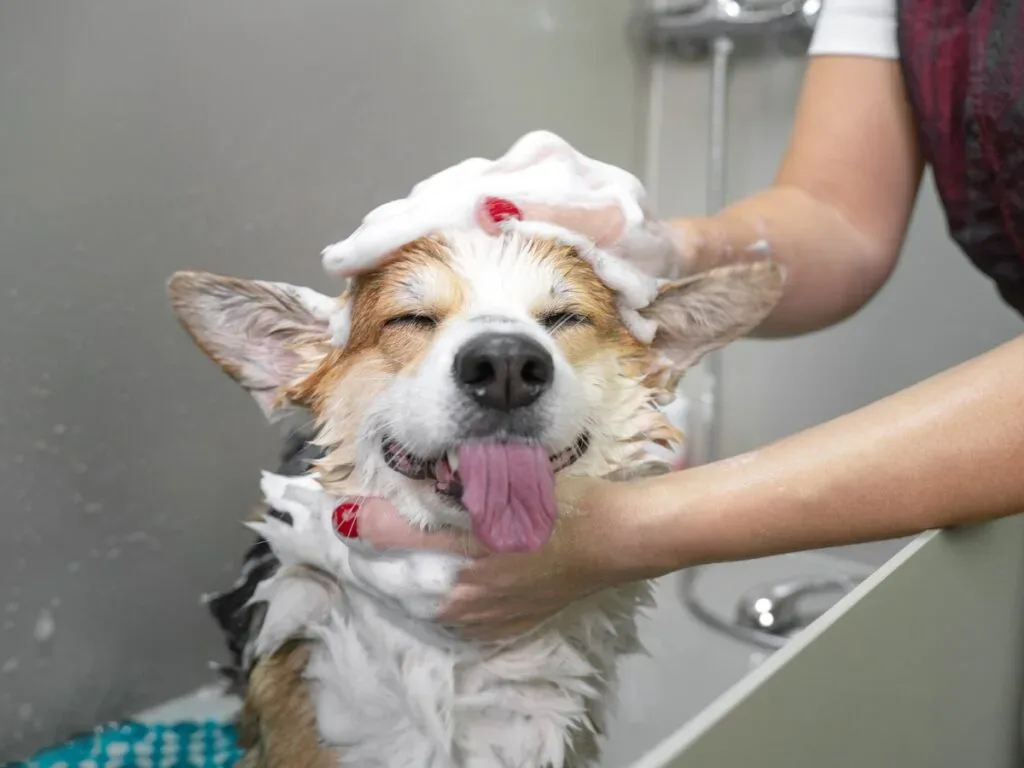
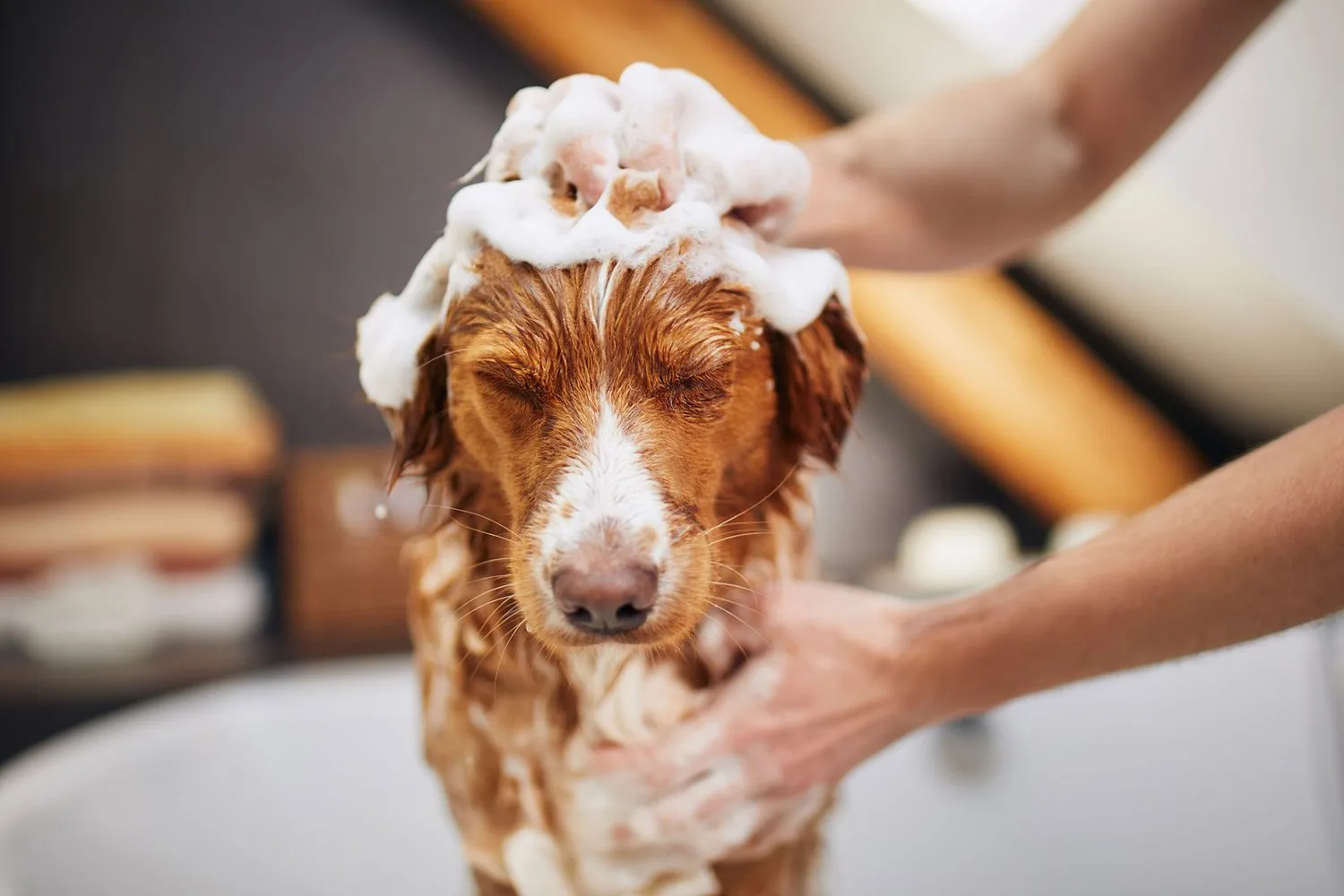
Leftover shampoo leaves skin parched and flaky, which is why rinsing must always exceed the time spent lathering. Direct water from the neck downward, using your fingers to part thick fur so clean water reaches the skin rather than gliding over the topcoat. Keep the spray gentle enough to avoid stressing the dog.

Pay special attention to sheltered areas where residue tends to pool. Run your fingers along the armpits, belly, groin, around the collar line, inside the legs, beneath the tail, and between the toes. Continue flushing those spots until the hair no longer feels slick and no bubbles appear when you press the coat gently.

  • Work water from the neck down toward the tail and legs
  • Separate dense fur with your fingers so rinsing reaches the roots
  • Recheck all folded and hidden regions after the main rinse
  • Follow veterinarian instructions exactly when using prescription or leave-on products

Press absorbent towels into the coat rather than rubbing aggressively. Blotting removes moisture without tightening existing tangles or creating friction on already tender areas. Replace the towel as soon as it becomes saturated and handle hairless patches or inflamed spots with extra care.

Towel drying alone may leave dampness trapped near the skin, especially on long-haired or double-coated dogs. When using a dryer, select the cool or lowest heat setting, keep the nozzle in constant motion, and direct airflow along the direction of hair growth while brushing small sections. Stop immediately if the skin feels warm, the dog shows signs of distress, or the moving air exposes a sore area.

  • Pat and blot with clean towels instead of harsh rubbing
  • Apply only cool or low heat with steady, controllable airflow
  • Move the dryer continuously following hair growth patterns
  • Feel deeply coated and folded regions for lingering dampness before finishing

Consistent brushing and skin checks beat occasional intensive sessions. Smooth coats may only need brief weekly attention, whereas shedding doubles and continuously growing coats often require multiple sessions per week. Schedule baths based on how dirty the dog gets, what the coat demands, and how the skin responds—not on a fixed calendar.

Certain breeds need tailored precautions. Hairless dogs lack the natural shielding provided by fur, leaving them far more vulnerable to sunburn, skin cancer, and insect bites from pests such as black flies. Their skincare routine follows the same principles but requires additional safeguards like sun protection and protective clothing during prolonged wet weather.

  • Match brushing frequency to coat type and maintenance needs
  • Base bath timing on real dirt, activity, and skin condition rather than habit
  • Maintain year-round parasite prevention through your veterinarian
  • Seek veterinary guidance for persistent itching, spreading redness, swelling, discharge, foul odor, hair loss, slow-healing wounds, or any new lump
  • Treat facial swelling, breathing difficulty, collapse, or rapid post-product reactions as emergencies

FAQ

Frequently asked questions

How frequently should I bathe my dog to support healthy skin?

There is no one-size-fits-all schedule. Choose bath timing based on coat type, how active the dog is, how much dirt it collects, and what a veterinarian recommends for any existing skin condition. Extend the gap between baths if you notice dryness or irritation developing. For Dog Skin Care Through Grooming Baths and Coat Checks, the safer version is usually the one that leaves less cleanup and less stress afterward.

What kind of brush works best for my dog's coat?

A bristle brush suits most smooth-coated dogs, while an undercoat rake targets the dense underlayer in double-coated breeds. Longer-haired dogs usually need a wide-tooth comb alongside whichever brush is appropriate. Apply light pressure throughout, and stop using a tool if it scratches the skin or causes discomfort. That keeps Dog Skin Care Through Grooming Baths and Coat Checks tied to a real home-care routine instead of guesswork.

How can I confirm all shampoo has been rinsed away?

Part the fur down to the roots and run clean fingertips across the skin, paying close attention to the armpits, belly, collar line, paws, and tail base. Keep rinsing those areas until the hair no longer feels slippery and squeezing produces no bubbles. Plan on spending more time rinsing than you do applying shampoo. For Dog Skin Care Through Grooming Baths and Coat Checks, the safer version is usually the one that leaves less cleanup and less stress afterward.

Which symptoms should trigger a visit to the veterinarian?

Contact your veterinarian for ongoing itching or biting, spreading redness, swelling, any discharge or unpleasant odor, patchy hair loss, wounds that refuse to heal, or a lump that changes over time. Emergency care is needed for facial swelling, difficulty breathing, collapse, or a severe reaction that develops quickly after using a grooming product. For Dog Skin Care Through Grooming Baths and Coat Checks, the safer version is usually the one that leaves less cleanup and less stress afterward.

Sponsored