How Often Should You Brush Your Dog Based on Coat Type?

Groomingdales guide

How Often Should You Brush Your Dog Based on Coat Type?

Help owners set a brushing schedule that matches coat type, loose-hair load, and the dog's tolerance for handling.

Published May 26, 2026

A dog that hates brushing is often reacting to the wrong routine, not just the brush itself. Too little brushing lets tangles and loose undercoat build up. Too much brushing or rough technique can leave the skin pink and irritated.

The useful middle ground is to match the schedule to the coat. That means thinking about texture, shedding, tangles, and the dog's patience level instead of asking for one perfect number that fits every breed.

What Is The Best Brushing Schedule For Your Dog?

Discover the optimalbrushingschedule for your canine companion! This video dives into howoften you should brush your dog to ...

  • Channel: Obedient Dog Guide

Video source: Obedient Dog Guide

Quick read

Key takeaways

  • Build the grooming routine around the jobs that most often cause discomfort or buildup, not around a perfect all-at-once schedule.
  • Use tools that are gentle enough to repeat regularly and simple enough to keep within reach.
  • When a basic home routine stops working, treat that as a clue to inspect the skin, coat, or nails more closely instead of cleaning harder.

Match the schedule to the coat instead of chasing one universal rule

A smooth short coat may only need occasional brushing to lift loose hair and spread natural oils. A double coat, feathered coat, or curly coat can need much more frequent work because loose hair and tangles stay trapped close to the body.

is why brushing advice sounds inconsistent online. The coat changes the workload, so the schedule has to change with it.

  • Brush short coats lightly and as needed for loose hair.
  • Brush dense or tangling coats often enough that buildup never gets ahead of you.
  • Increase frequency during heavy shed or weather-change periods.
How Often Should You Brush Your Dog Based on Coat Type?

Pick a tool that solves the actual coat problem

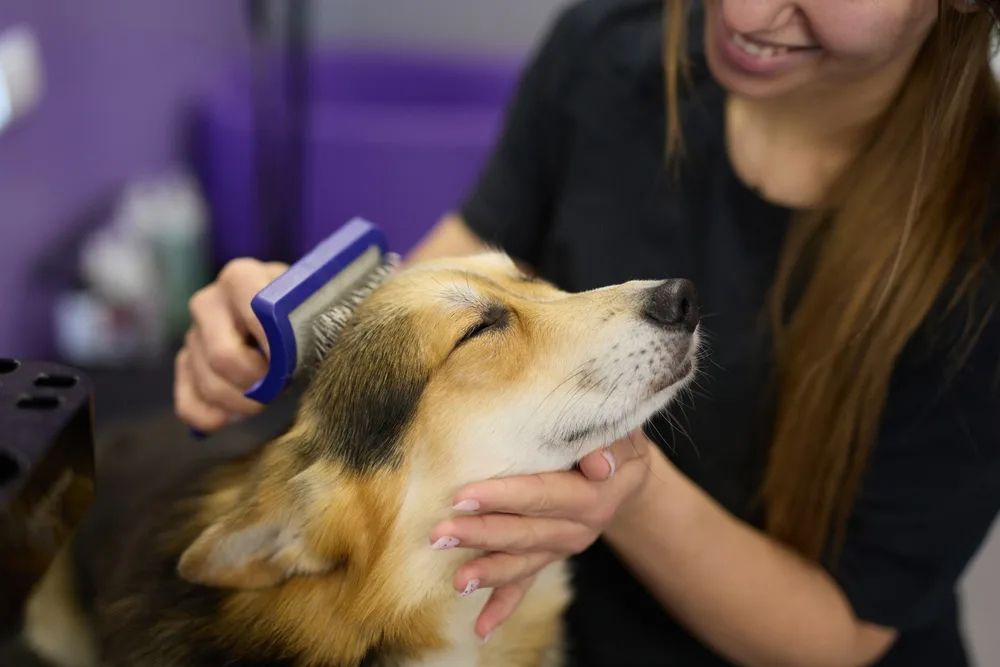
A slicker brush, rake, comb, or rubber curry all do different jobs. Owners often think they need to brush more, when the bigger problem is that the tool only skims the top and never reaches the loose coat underneath.

The goal is not aggressive force. It is using the tool that matches whether you are lifting loose hair, checking tangles, or opening up an undercoat.

  • Use a comb to verify that the coat is really clear in problem spots.
  • Do not drag a de-shedding or dematting tool over sensitive skin just because the coat looks full.
  • Change tools when the task changes from surface brushing to tangle checking.
How Often Should You Brush Your Dog Based on Coat Type?
Sponsored

Keep puppies and anxious dogs on shorter, calmer brushing sessions

Young dogs and worried dogs usually learn better from brief repeat sessions than from one long wrestling match. A calm two-minute brush today can do more good than forcing ten angry minutes that make the next session harder.

slower approach also helps the owner notice which body areas create tension, like legs, tail, belly, or behind the ears.

  • End early while the dog is still succeeding.
  • Build tolerance before the coat becomes a bigger cleanup problem.
  • Reward stillness and calm handling, not only the finished brush-out.
How Often Should You Brush Your Dog Based on Coat Type?

Know when home brushing should hand off to a groomer or vet

If the coat is already matted to the skin, brushing can become painful fast. The same is true when you find hot spots, scabs, parasites, or skin that looks inflamed under the coat.

At that point the goal shifts from maintenance to safe intervention. A groomer can handle coat removal, and a vet may need to address the skin underneath before routine brushing resumes.

  • Do not rip through mats that are tight to the skin.
  • Pause if the skin looks angry, damp, or infected.
  • Use professional help when the coat condition has moved past routine upkeep.

FAQ

Frequently asked questions

How often should a short-haired dog be brushed?

Usually less often than a long or double-coated dog, but still enough to lift loose hair and check skin condition. The exact rhythm depends on shedding and how quickly coat builds up around the house. On how often should you brush your dog based on coat type, that timing works best when you act before buildup becomes obvious.

Do double-coated dogs need more brushing during shedding season?

Yes. When the undercoat is releasing heavily, brushing more often helps remove loose coat before it mats, packs down, or ends up all over the furniture. For how often should you brush your dog based on coat type, the safer version is usually the one that leaves less cleanup and less stress afterward.

Can you brush a dog too much?

Yes. Rough daily brushing with the wrong tool can irritate the skin, especially on thin-coated areas. The goal is regular maintenance, not scrubbing the dog with a brush. For how often should you brush your dog based on coat type, the safer version is usually the one that leaves less cleanup and less stress afterward.

Sponsored