How to Bathe a Puppy Safely From First Rinse to Blow-Dry

Groomingdales guide

How to Bathe a Puppy Safely From First Rinse to Blow-Dry

Teach owners a calm, age-appropriate puppy bath from preparation through complete drying, with specific tools, a practical frequency, and clear reasons to pause for veterinary advice.

Published August 7, 2026

A puppy’s first baths are training sessions as much as cleaning sessions. The aim is not to rush through a tub full of suds, but to teach the puppy that water, handling, towels, and dryer noise arrive in predictable, manageable steps.

Age, coat texture, skin condition, and previous experience all change the safest approach. Start with a prepared work area and the mildest method that will do the job, then stop if the puppy becomes chilled, panicked, painful, or develops signs that call for a veterinarian rather than another product.

How to properly wash your dog!

A practical YouTube walkthrough related to How to Bathe a Puppy Safely From First Rinse to Blow-Dry.

  • Channel: dogsbylogan

Video source: dogsbylogan

Quick read

Key takeaways

  • Build the grooming routine around the jobs that most often cause discomfort or buildup, not around a perfect all-at-once schedule.
  • Use tools that are gentle enough to repeat regularly and simple enough to keep within reach.
  • When a basic home routine stops working, treat that as a clue to inspect the skin, coat, or nails more closely instead of cleaning harder.

Identify whether the puppy has a short oily coat, a long coat that needs moisture, a dense undercoat, or already-irritated skin. Product choice is not one-size-fits-all. Ask the veterinarian what cleanser and conditioner fit the puppy before the first full product bath, particularly when the puppy scratches, has flaky skin, or is being treated for a skin problem.

Place a non-slip mat in a sink or tub and set out a soft washcloth, puppy-safe pH-balanced shampoo, dog conditioner, a rinsing cup or gentle spray attachment, an absorbent towel, a coat-appropriate brush, treats, and a small handheld dryer with a low setting. Open bottles and test the water before bringing the puppy into the area so there is no need to leave a wet dog unattended.

Brush only enough to remove loose hair and easy tangles before the coat gets wet. Keep the room warm, close doors, and arrange the hose and cord where paws cannot catch them. If the puppy has open sores, a strong skin odor, ear discharge, swelling, or a painful area, postpone the bath and contact a veterinarian.

  • Non-slip bath mat and lukewarm water
  • Soft washcloth and gentle rinsing cup or spray attachment
  • Dog-specific pH-balanced shampoo and conditioner
  • Absorbent towel, appropriate brush, treats, and low-setting dryer
How to Bathe a Puppy Safely From First Rinse to Blow-Dry

A puppy can begin learning the routine at about two months without needing a full shampoo bath. Let the puppy stand briefly on the dry mat, hear the water from a distance, accept a light brush, and take treats. End while the puppy is still calm so the next session starts from a successful memory.

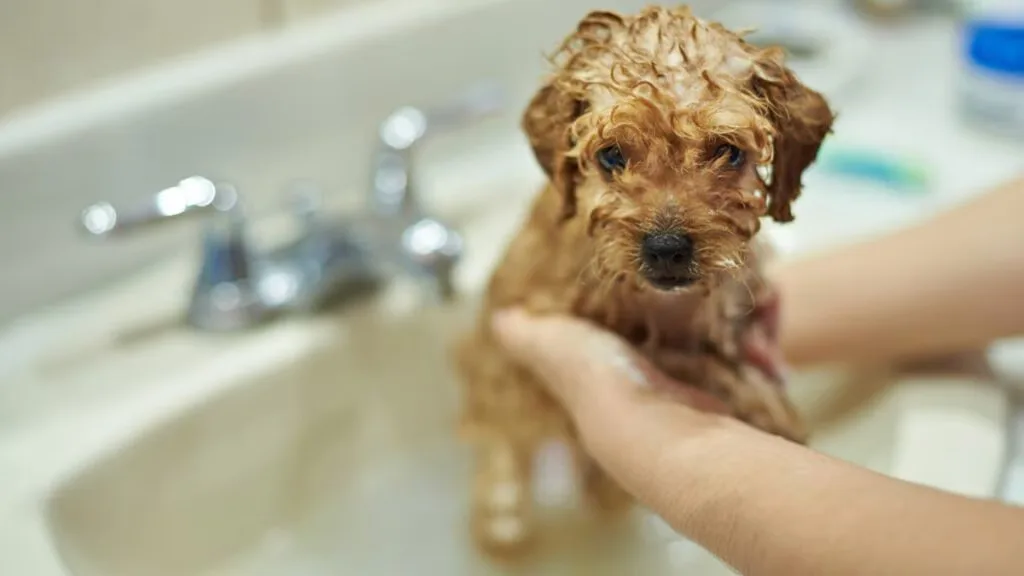
For a puppy younger than roughly three or four months, a lukewarm damp washcloth is often enough for ordinary cleanup. Wipe in the direction the hair grows and keep the session brief. Check the water against the inside of your wrist; a puppy experiences heat differently and can become uncomfortable or chilled quickly.

When progressing to the tub, wet the body with a soft stream beginning at the shoulders rather than spraying the face. Keep one supporting hand on the puppy without pinning or squeezing. Pause when the puppy stiffens, scrambles, cries, pants hard, or cannot take a treat, and resume another day at an easier step if the coat is not contaminated with something hazardous.

  • Practice standing on the dry bath mat first
  • Pair brush touches and distant water sounds with treats
  • Use a lukewarm washcloth for simple early cleanup
  • Stop before fear escalates into frantic struggling
How to Bathe a Puppy Safely From First Rinse to Blow-Dry
Sponsored

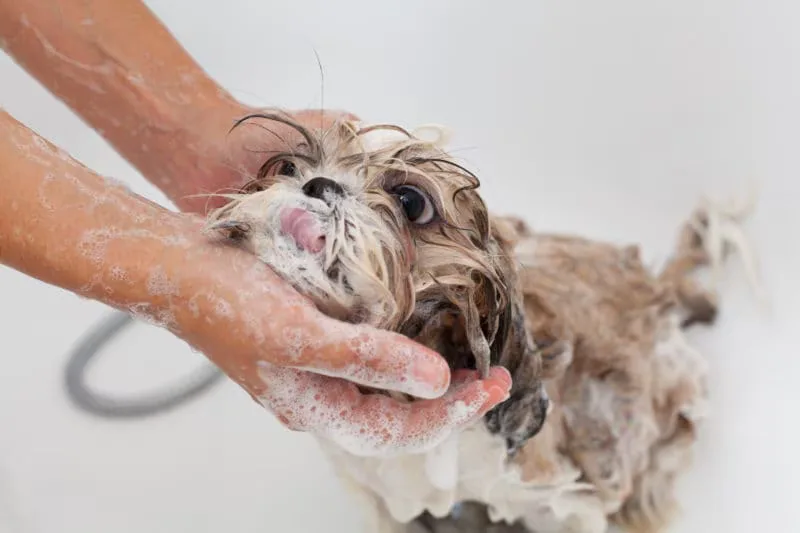
Once the puppy is about three months old and needs a full bath, use only a dog-specific, pH-balanced cleanser approved for that puppy's coat and skin. Dilute it only as the label directs. Spread it with gentle hand motions that follow hair growth; scrubbing backward can tangle longer coats and make sensitive skin more reactive.

Use minimal product near the head. Do not direct a sprayer toward the eyes, nose, mouth, or ear openings, even when the label says tearless. Clean the face with a barely damp washcloth, and support the base of each ear closed between thumb and finger while wiping nearby so water is less likely to enter the L-shaped ear canal and become trapped.

Apply conditioner after the first rinse when the chosen product calls for it. Shampoo removes oil along with dirt, while a suitable conditioner returns slip and moisture that can make brushing and drying gentler. Follow the product contact time rather than leaving it on longer, and never substitute human shampoo, essential-oil mixtures, or styling cream.

  • Work shampoo in the same direction as hair growth
  • Clean the face with a minimally damp washcloth
  • Keep spray out of eyes, nose, mouth, and ear canals
  • Use conditioner according to its label and rinse-out instructions
How to Bathe a Puppy Safely From First Rinse to Blow-Dry

Begin rinsing at the neck and move down the back, chest, belly, legs, paws, and tail with a soft stream. Part long or dense hair with your fingers so water reaches the skin. Keep the puppy facing away from the spray and use the cup or washcloth around the head instead of pushing water toward the ears.

Rinse longer than the first moment the water looks clear. Feel the coat with clean fingers for slippery patches, foam at the skin, or product collecting under the front legs and around the paws. Residue can contribute to itching and can also make the coat feel dull or greasy after it dries.

Repeat the same complete rinse after conditioner. Before lifting the puppy, turn off the water, squeeze excess water gently from longer hair without twisting it, and let the puppy stand securely for a moment. A final skin check may reveal redness or tenderness that was hidden by a dry coat and should not be rubbed during drying.

  • Rinse from neck toward tail and down each leg
  • Part thick hair so clean water reaches the skin
  • Check armpits, belly, paws, and tail for residue
  • Rinse conditioner as completely as shampoo

Wrap the puppy immediately in an absorbent towel and press or blot instead of rubbing briskly. Friction can tighten tangles in a long coat and can overstimulate a puppy that has already worked hard to stay calm. Replace a soaked towel when necessary and dry the ears, paws, belly, and skin folds carefully.

Introduce the dryer several feet away on its lowest airflow and low or no-heat setting. A small handheld unit is easier to control than a powerful dryer for an early lesson. Aim along the direction of hair growth, keep the nozzle moving, avoid the face and ear openings, and brush only sections the puppy tolerates without pulling.

Continue until the coat is dry at the skin rather than merely dry on top, especially through dense areas and where legs meet the body. Stop airflow if the skin feels hot or the puppy shivers, panics, or tries to bite at the air. A warm room, fresh towel, and short breaks are safer than raising the heat to finish faster.

  • Blot with one or more absorbent towels
  • Keep dryer airflow low and heat low or off
  • Move airflow with hair growth and away from the face
  • Check dense coat, folds, paws, and belly for hidden dampness

For many healthy puppies, about one full bath each month is a reasonable starting rhythm, with washcloth spot cleaning between baths. A puppy that rolls in mud may need an extra rinse, while a dry or sensitive coat may need a longer interval. A veterinarian's medicated-bath schedule overrides a general calendar because treatment products have their own contact times and frequency.

After each bath, watch the puppy over the next day for persistent scratching, hives, spreading redness, swelling, painful skin, vomiting, breathing trouble, or unusual lethargy. Rinse again with plain lukewarm water if ordinary product residue is suspected, but seek urgent veterinary care for facial swelling or breathing difficulty and prompt advice for severe discomfort or a rapidly spreading reaction.

Call the veterinarian when ear odor, head shaking, discharge, or pain appears after water may have entered an ear. The same applies to sores, moist patches, hair loss, foul skin odor, or itching that persists despite a complete rinse. Record the product used and the timing of the reaction; that information helps the clinic decide whether the puppy needs an examination or a different bathing plan.

  • Start near one full bath per month for many healthy puppies
  • Use a washcloth for small messes between scheduled baths
  • Follow veterinary directions for medicated shampoo frequency
  • Escalate swelling, breathing trouble, discharge, pain, or persistent itching

FAQ

Frequently asked questions

How young can a puppy start learning about baths?

A puppy can begin gentle exposure at about two months with a dry mat, light brushing, treats, and a lukewarm washcloth. A dog-specific shampoo and conditioner can usually wait until about three months, unless a veterinarian gives different instructions. For How to Bathe a Puppy Safely From First Rinse to Blow-Dry, the safer version is usually the one that leaves less cleanup and less stress afterward.

What tools should be ready before the puppy gets wet?

Prepare a non-slip mat, washcloth, dog-specific shampoo and conditioner, gentle rinse cup or sprayer, absorbent towels, coat-appropriate brush, treats, and a controllable handheld dryer set to low airflow and low or no heat. For How to Bathe a Puppy Safely From First Rinse to Blow-Dry, the safer version is usually the one that leaves less cleanup and less stress afterward.

How can I tell that shampoo is fully rinsed from a puppy?

Part the hair and feel down to the skin with clean fingers. Keep rinsing while any area feels slippery, produces bubbles, or holds product around the chest, belly, armpits, paws, or tail. Conditioner needs the same complete rinse. For How to Bathe a Puppy Safely From First Rinse to Blow-Dry, the safer version is usually the one that leaves less cleanup and less stress afterward.

When should a skin or ear problem after bathing go to a veterinarian?

Get urgent help for facial swelling or breathing trouble. Contact the veterinarian promptly for spreading redness, hives, severe or persistent itching, painful or moist sores, foul odor, ear discharge, repeated head shaking, or unusual lethargy. On How to Bathe a Puppy Safely From First Rinse to Blow-Dry, that timing works best when you act before buildup becomes obvious.

Sponsored