How To Brush a Dog’s Coat—and How Often for Safer At-Home Dog Grooming

Groomingdales guide

How To Brush a Dog’s Coat—and How Often for Safer At-Home Dog Grooming

Help visitors handle How To Brush a Dog's Coat—and How Often for Safer At-Home Dog Grooming with a clear, practical checklist grounded in real examples.

Published July 15, 2026

Brushing your dog’s coat is one of the simplest yet most impactful parts of at-home grooming. Beyond keeping their fur neat, regular brushing distributes natural skin oils, removes loose hair and debris, and gives you a valuable opportunity to check for ticks, lumps, or skin irritations. However, the right technique and frequency depend entirely on your dog’s coat type, seasonal shedding patterns, and temperament. This guide breaks down how to brush safely and effectively at home.

Keep your pet’s coat looking perfect with this Deshedding Comb Grooming Brush—grab one now! 🐱✨

dogs #dogowners #cats #catowners #catlover #doglover #pets.

  • Channel: Paw Mingle

Video source: Paw Mingle

Quick read

Key takeaways

  • Build the grooming routine around the jobs that most often cause discomfort or buildup, not around a perfect all-at-once schedule.
  • Use tools that are gentle enough to repeat regularly and simple enough to keep within reach.
  • When a basic home routine stops working, treat that as a clue to inspect the skin, coat, or nails more closely instead of cleaning harder.

Start by identifying your dog’s coat category, as this dictates how often they need attention. Slick- or smooth-haired breeds like Vizslas don’t require frequent brushing, but a weekly session helps redistribute oils and catch early shedding. If you notice clumps of loose hair or increased dander, bump it up to two or three times a week.

Double-coated breeds fall into two groups. Short double-coats like Shiba Inus benefit from brushing two to three times weekly, scaling up to daily during heavy shed seasons. Longer double-coats, such as Labrador and Golden Retrievers, have a dense undercoat beneath a longer topcoat. Brush them twice a week to prevent mats, and increase frequency during seasonal blows. Wire-coated breeds need weekly brushing combined with periodic hand-stripping to pull out dead, wiry hairs and encourage fresh growth. Stripping frequency varies by breed, ranging from weekly to once every six months, so consult a professional groomer to establish a safe schedule.

  • Slick-haired dogs: Weekly brushing, plus extra during shedding seasons.
  • Short double-coats: Two to three times per week; daily when actively shedding.
  • Long double-coats: Twice weekly minimum; more often to prevent tangles.
  • Wire coats: Weekly brushing paired with hand-stripping as needed.
How To Brush a Dog’s Coat—and How Often for Safer At-Home Dog Grooming

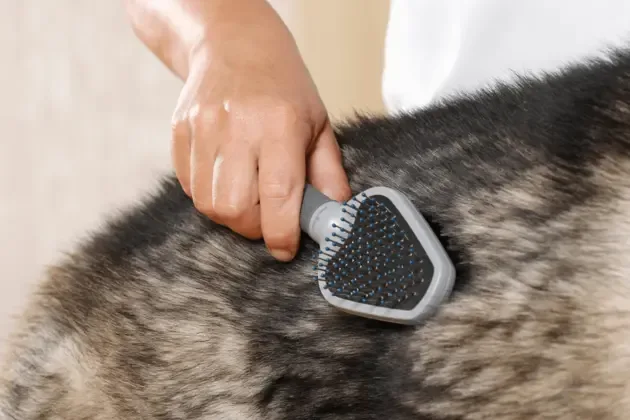
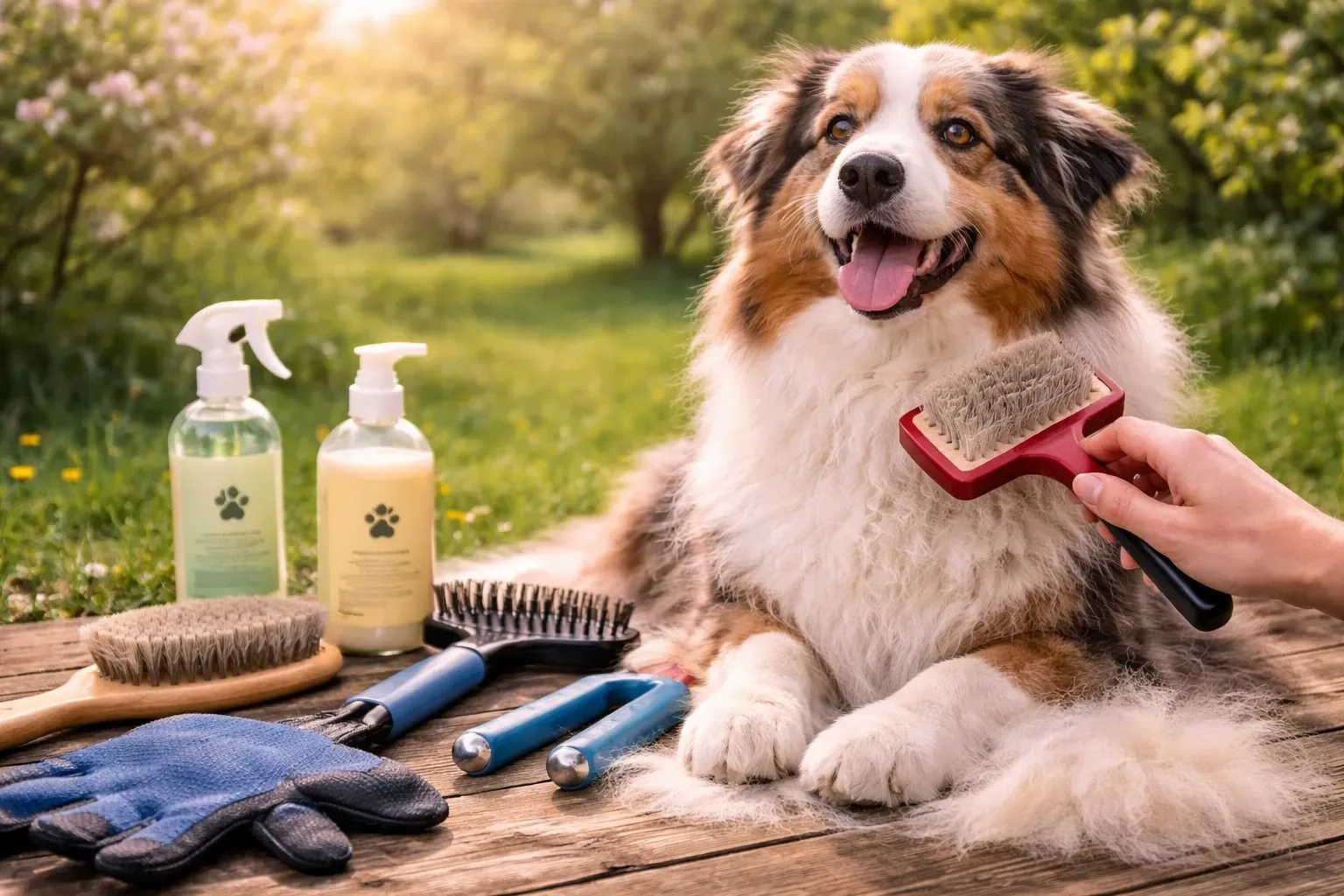
The wrong brush can cause discomfort or damage, so match your tool to the job. A slicker brush or metal pin comb works well for most coats, especially when practicing line brushing. This technique involves parting the fur and brushing out tangles in the lower layers first before moving upward—a must for long-haired breeds. A dog-safe detangling spray can also make stubborn knots much easier to manage.

For wire coats, hand-stripping is essential. This involves methodically plucking out dead hairs by hand or with a stripping knife so new, soft growth can come through while maintaining the breed’s coarse texture. Always brush gently down to the skin, but apply light pressure to avoid irritating sensitive areas.

  • Use a slicker brush or fine-toothed metal comb for everyday smoothing.
  • Practice line brushing for long-haired breeds to reach the skin safely.
  • Apply a pet-safe detangling spray before tackling knotted areas.
  • Reserve hand-stripping for wire coats to preserve coat texture and health.
How To Brush a Dog’s Coat—and How Often for Safer At-Home Dog Grooming
Sponsored

Grooming should be a positive bonding experience, not a source of stress. If your dog resists brushing, step back to square one and rebuild tolerance using cooperative care methods. Start with brief, treat-filled sessions where the brush never touches the coat, then gradually introduce light strokes. Pair grooming with high-value rewards and keep early sessions under five minutes.

For dogs with significant anxiety or fear-based resistance, consider working with a certified positive-reinforcement trainer (such as a KPA-CTP or CPDT-KA). They can design a customized behavior plan to help your dog feel secure during handling.

  • Start with short, reward-heavy sessions to build positive associations.
  • Gradually increase duration only when your dog remains relaxed.
  • Use a curry comb or undercoat rake for finishing touches on double-coated breeds.
  • Consult a certified trainer if fear or aggression persists despite desensitization efforts.
How To Brush a Dog’s Coat—and How Often for Safer At-Home Dog Grooming

Even well-intentioned owners can accidentally harm their dog’s coat or skin. Overusing shedding blades or aggressive undercoat rakes can cause micro-tears, matting, or skin irritation. These tools should be reserved for heavy shed seasons and used with light, controlled strokes. Never brush over existing mats or irritated skin, as this can worsen pain and lead to inflammation.

Another frequent mistake is waiting too long between sessions. Small tangles quickly turn into painful knots, especially behind the ears, under collars, and around the hind legs. Regular, gentle maintenance is always safer and more effective than emergency de-matting.

  • Limit shedding blade usage to prevent skin damage and coat thinning.
  • Never force a brush through tight mats or inflamed skin.
  • Check high-friction zones regularly, including ears, armpits, and tail base.
  • Stop immediately if your dog shows signs of pain, excessive panting, or avoidance.

Once the brushing is complete, take a few minutes to run a quick wellness scan. Feel along your dog’s spine, ribs, legs, and abdomen for any unexplained lumps, swelling, or sore spots. Inspect the skin for redness, flakes, or parasites, and ensure the entire coat is completely free of tangles.

End the session with praise and a favorite treat. Note how your dog responded to the routine so you can adjust pressure, pacing, or tools next time. Consistent, mindful grooming keeps your dog comfortable, healthy, and happy.

  • Palpate the entire body for lumps, bumps, or sensitivity.
  • Verify the coat is fully detangled, especially in dense areas.
  • Check paw pads, ears, and tail base for debris or irritation.
  • Reward calm behavior and log any changes in coat or skin condition.

FAQ

Frequently asked questions

How often should I actually brush my dog?

Frequency depends on coat type. Slick-haired breeds typically need weekly brushing, while double-coated and long-haired dogs usually require two to three sessions per week. Increase to daily brushing during heavy shedding seasons to prevent mats and control loose fur. On How To Brush a Dog’s Coat—and How Often for Safer At-Home Dog Grooming, that timing works best when you act before buildup becomes obvious.

What’s the safest way to brush a double-coated dog?

Double-coated breeds have a soft undercoat and a longer topcoat. Use an undercoat rake or slicker brush to gently remove loose underfur without cutting the topcoat. Always brush in small sections, working down to the skin with light pressure to avoid irritation. That keeps How To Brush a Dog’s Coat—and How Often for Safer At-Home Dog Grooming tied to a real home-care routine instead of guesswork.

Should I use detangling spray or conditioner?

Yes. A dog-safe detangling spray or lightweight grooming conditioner reduces friction, protects the hair shaft, and makes brushing significantly easier, especially for long-haired or curly-coated breeds. For How To Brush a Dog’s Coat—and How Often for Safer At-Home Dog Grooming, the safer version is usually the one that leaves less cleanup and less stress afterward.

My dog hates being brushed. How do I fix it?

Start over with desensitization. Use short, positive sessions paired with high-value treats, and gradually introduce the brush near the coat before making contact. If anxiety or fear doesn’t improve, consult a certified force-free trainer for a tailored behavior modification plan. For How To Brush a Dog’s Coat—and How Often for Safer At-Home Dog Grooming, the safer version is usually the one that leaves less cleanup and less stress afterward.

Sponsored