How to Clean Your Dog Between Baths Without Irritating the Skin

Groomingdales guide

How to Clean Your Dog Between Baths Without Irritating the Skin

Help owners clean paws, coat, and face between full baths while protecting natural skin oils and knowing when waterless cleaning is not enough.

Published August 3, 2026

A dog that smells like wet fur after a walk doesn't automatically need a full bath. Over-bathing strips the natural oils that protect both skin and coat, leaving dogs vulnerable to dryness and bacterial overgrowth.

Waterless cleaning offers a practical middle ground. By targeting the dirtiest areas with dog-safe products and finishing with thorough brushing, you can maintain a fresher coat without disrupting the skin barrier.

For dogs who dread bath time, these methods provide a gentler alternative that still keeps them looking and feeling their best.

Bathe your dog like a groomer! ✨

A practical YouTube walkthrough related to How to Clean Your Dog Between Baths Without Irritating the Skin.

  • Channel: Howls Your Day

Video source: Howls Your Day

Quick read

Key takeaways

  • Build the grooming routine around the jobs that most often cause discomfort or buildup, not around a perfect all-at-once schedule.
  • Use tools that are gentle enough to repeat regularly and simple enough to keep within reach.
  • When a basic home routine stops working, treat that as a clue to inspect the skin, coat, or nails more closely instead of cleaning harder.

Waterless cleaning shines for routine maintenance—dusty coats, slightly oily patches, and muddy paws after a walk. It is not designed for heavy contamination, exposure to hazardous substances, or medicated bathing needs.

Regular full baths can deplete the lipid layer that keeps skin supple and shields against infection. Between-bath care should ease visible soiling without replacing proper grooming entirely.

Before beginning, inspect the skin closely. Any signs of redness, open wounds, swelling, discharge, or a persistent foul smell mean you should pause and consult a veterinarian rather than layer on more product.

  • Examine paws, belly, rear, face, and the full coat to identify where dirt has actually accumulated.
  • Test a damp cloth on a small area before committing to a larger clean.
  • Reserve a full rinse bath for situations where product residue must be entirely removed.
  • Seek veterinary guidance if odor or skin irritation returns between cleaning sessions.
How to Clean Your Dog Between Baths Without Irritating the Skin

Look for foams, powders, or sprays formulated expressly for dogs. These products carry a pH balanced for canine skin and use non-toxic ingredients, which matters because your dog will likely lick their coat after you are done.

Work the product into the coat away from the head, massaging it down to the skin. Allow it to rest for the time the label recommends, and supervise closely to stop any licking attempts.

Limit dry shampoo use to roughly once per week. Overuse risks residue buildup and further depletion of the coat's natural protective oils.

  • Read the label carefully and perform a patch test on a small skin area first.
  • Keep all products away from the eyes, mouth, and ear canals.
  • Apply just enough to penetrate to the dirty fur without oversaturating.
  • Discontinue use immediately if you notice increased scratching, redness, coughing, or excessive licking.
How to Clean Your Dog Between Baths Without Irritating the Skin
Sponsored

Applying dry shampoo is only the first step. Brushing afterward is essential to lift away loosened dirt, spent product, and any tangles before they settle back against the skin.

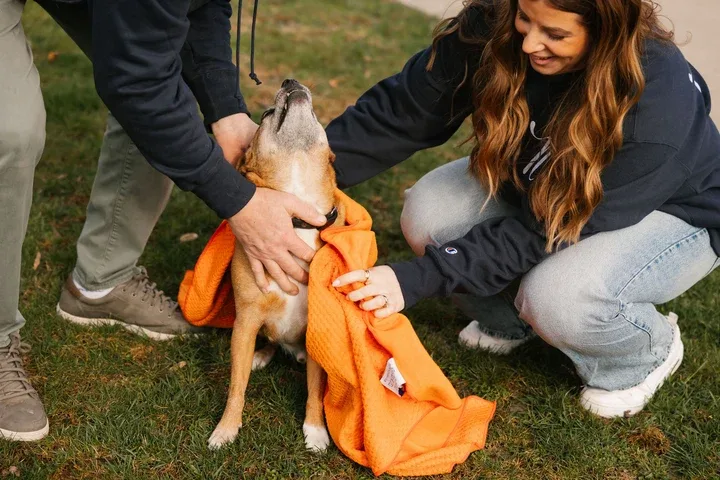
After brushing, run a clean, dry towel along the coat using pressing or wiping motions. Allow your dog to shake freely—this is a natural and helpful part of the process. Performing the cleanup outdoors or on a surface that is easy to sweep keeps scattered powder and fur contained.

Dogs with long, dense, or double coats require extra attention. Part the fur with your fingers and inspect the undercoat to confirm no damp or powdery pockets remain hidden beneath the top layer.

  • Match the brush type to your dog's coat rather than forcing a single tool through mats.
  • Work in sections, moving from the neck down toward the tail.
  • Press with a towel instead of rubbing aggressively, which can tangle longer hair.
  • Inspect armpits, the chest, belly, and undercoat for any leftover residue.
How to Clean Your Dog Between Baths Without Irritating the Skin

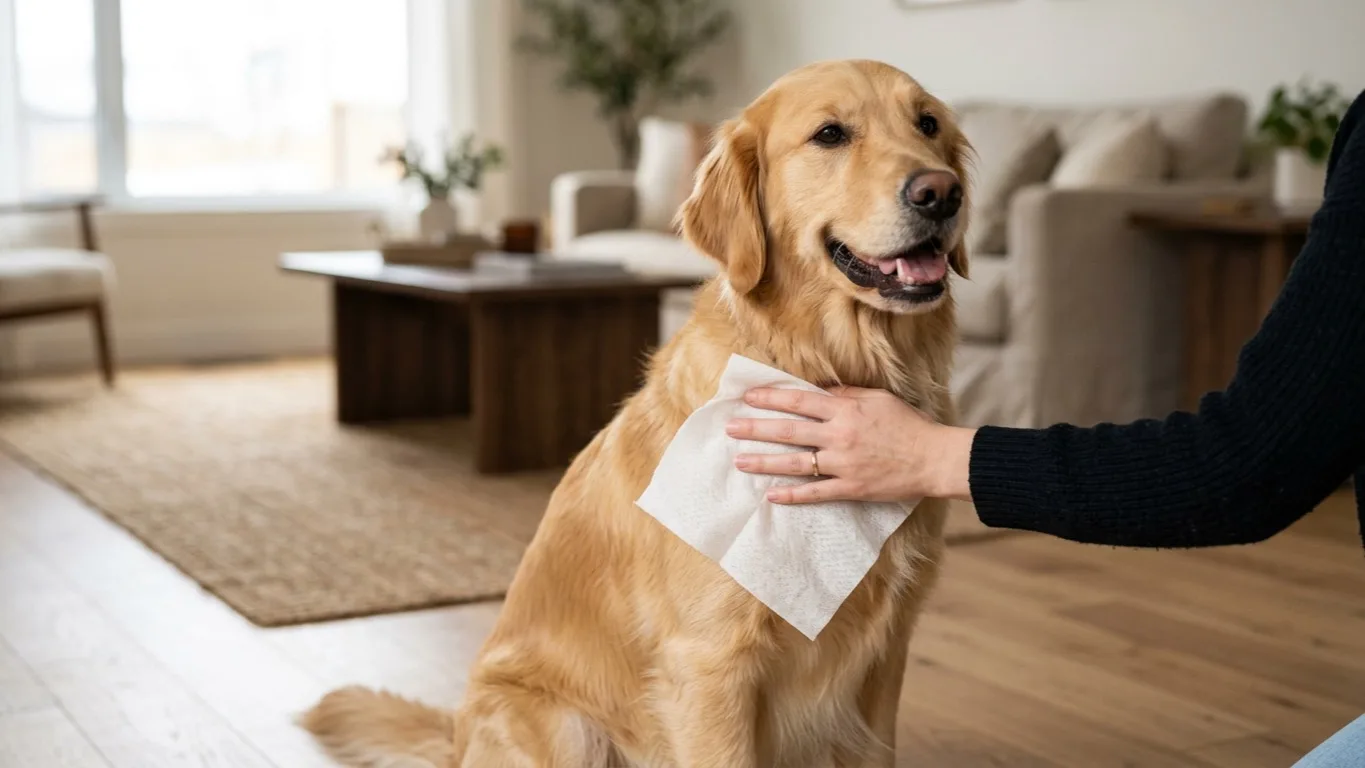
Wet wipes designed for dogs provide a fast solution for on-the-go freshening. Options range from unscented formulas to deodorizing and antibacterial varieties, giving you flexibility depending on your dog's needs.

Start with the paws. Gently wipe between the paw pads and around each toe, where grit, salt, and mud tend to collect after outdoor time.

For the face, use a separate wipe to avoid transferring paw bacteria near the eyes. Dab around the muzzle and outer face while steering clear of the eyes, mouth, and inner ears.

  • Choose unscented wipes if your dog has fragrance-sensitive skin.
  • Dedicate separate wipes for paws, body, and face to prevent cross-contamination.
  • Dry the area between paw pads thoroughly after wiping.
  • Throw away a wipe as soon as it shows visible dirt.

Baking soda can help neutralize odors, and cornstarch can absorb excess oil, but both deserve careful consideration. A practical approach is to consulting a veterinarian before use, as some dogs react adversely to baking soda.

If your vet approves, apply a modest amount from the neck backward, keeping powder well away from the head. For dogs who are skittish about sprinkling, you can pour the powder onto a towel and gently press it into the coat instead.

Lightly massage the product in, let it sit for a few minutes, then brush thoroughly until no trace remains. Make sure your dog does not ingest more than an insignificant amount.

  • Consult your veterinarian before using baking soda on dogs with allergies or sensitive skin.
  • Never apply any powder near the nose, eyes, mouth, or open wounds.
  • Use the towel-application method for anxious or nervous dogs.
  • Brush and towel until the coat shows no visible powder.

Your dog's bedding, crate liner, and grooming towels harbor dirt, loose hair, and odors that redeposit onto a freshly cleaned coat. Washing these items on the same day helps sustain results.

Keep the cleaning session positive. Speak in a calm voice, limit handling to short periods, and offer a reward when finished. If your dog becomes fearful or stressed, stop immediately rather than forcing attention on the face, paws, or undercoat.

Remember that waterless cleaning is cosmetic, not therapeutic. Ongoing odor, greasy skin, hair loss, sores, ear discharge, or compulsive scratching signal an underlying issue that requires a veterinarian, not additional deodorizer.

  • Launder bedding and grooming towels the same day they are used.
  • Store brushes in a dry place and remove trapped fur after each session.
  • Reward calm behavior and end the session before your dog becomes overwhelmed.
  • Schedule a veterinary visit for recurring odor, redness, pain, or discharge.

FAQ

Frequently asked questions

How often can I use dry shampoo on my dog?

About once a week is a reasonable maximum unless the product label or your veterinarian advises otherwise. Using it daily can lead to residue buildup and disrupt the natural oil balance in your dog's coat. On how to clean your dog between baths without irritating the skin, that timing works best when you act before buildup becomes obvious.

Can I wipe my dog's face with a dog wipe?

Yes, but always use a fresh wipe designated for the face and keep it away from the eyes, mouth, and inner ears. Never reuse a wipe that has cleaned the paws on the face. For how to clean your dog between baths without irritating the skin, the safer version is usually the one that leaves less cleanup and less stress afterward.

When should I skip waterless cleaning and call the vet?

A full rinse bath or veterinary consultation is warranted if your dog has heavy contamination, contact with a toxic substance, persistent odor, red or broken skin, discharge, visible pain, or intense itching. On how to clean your dog between baths without irritating the skin, that timing works best when you act before buildup becomes obvious.

Sponsored