Position your dog on a secure, non-slip surface under bright lighting. Run both hands through the entire coat, paying special attention to high-friction zones: behind the ears, under the collar, around the shoulders, along the inner thighs, and between the toes. These areas trap moisture, debris, and loose hair, making them prime spots for mat formation and skin irritation.
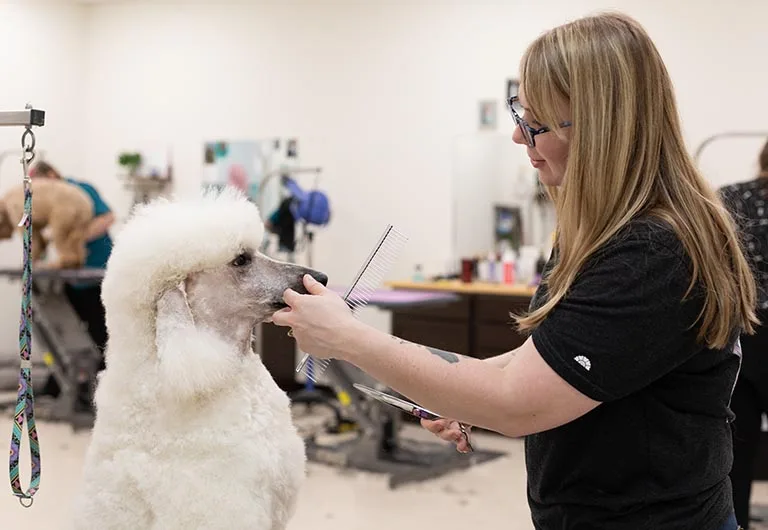
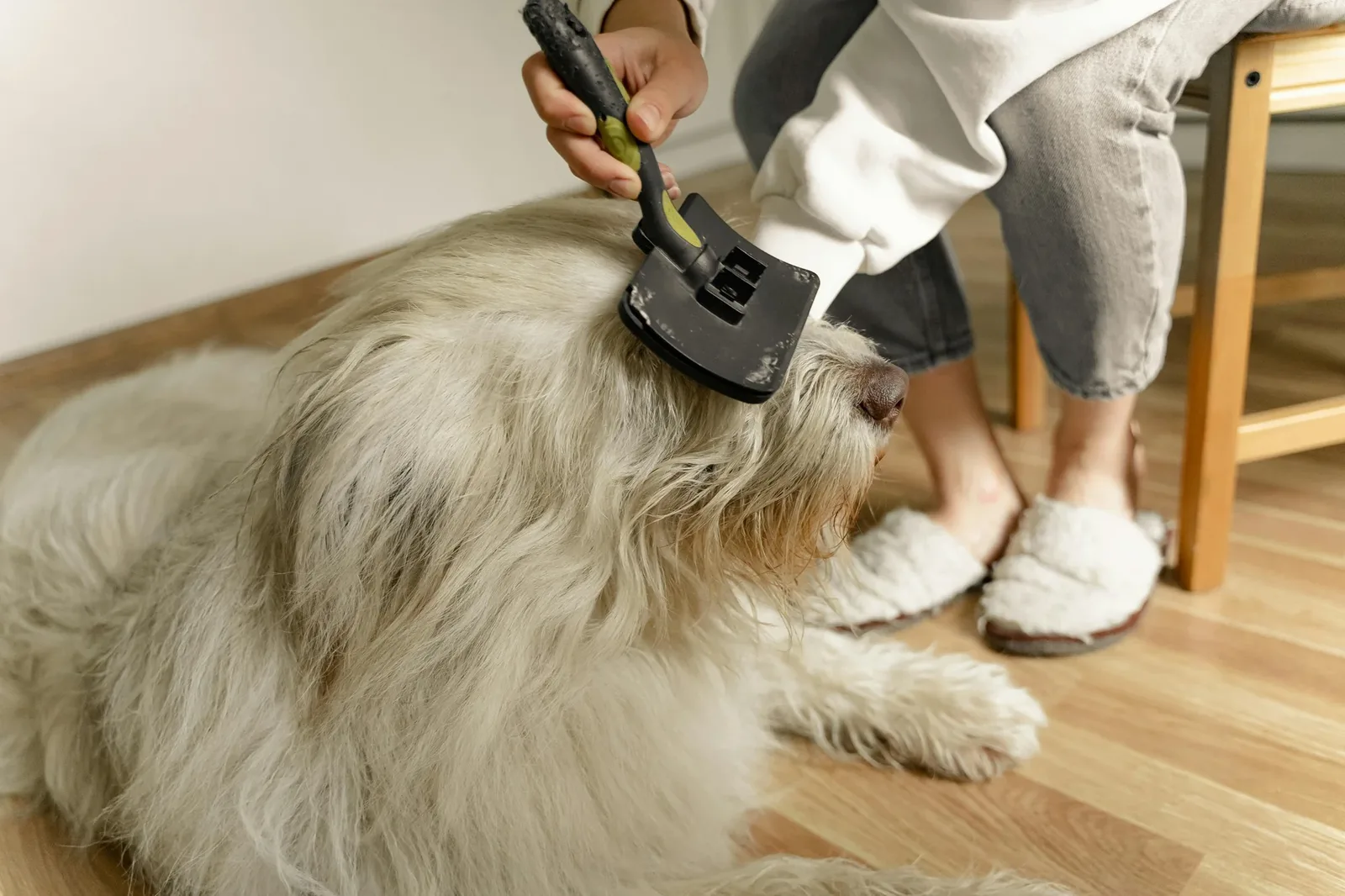
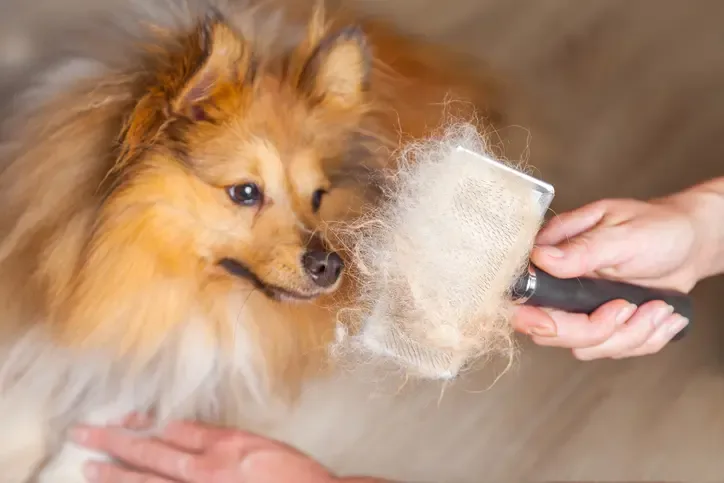
Gather only the tools your inspection reveals you need. A damp canine grooming cloth or glove works well for surface hair removal. Match your brush to the coat type, keep a metal comb handy for checking longer regions, and have a mat pick available for loose tangles. Include nail clippers or a grinder, treats, and a dry towel. Bringing everything at once creates unnecessary stress; selective tool use keeps sessions focused and calm.
If you encounter bald spots, redness, scaling, scabs, swelling, discharge, or areas that cause your dog to pull away, stop grooming that region. These signals may indicate allergies, parasites, bacterial or fungal infections, or injury. Document the location and consult a veterinarian rather than covering the problem with fragrances, shampoos, or repeated brushing attempts.
- Non-slip surface with adequate lighting
- Damp canine grooming cloth or reusable glove
- Coat-matched brush, metal comb, and mat pick
- Nail trimmer or grinder, treats, and absorbent towel