What Dog Owners Should Know About Grooming Restraint Safety

Groomingdales guide

What Dog Owners Should Know About Grooming Restraint Safety

Explore What Dog Owners Should Know About Grooming Restraint Safety through the specific situations and details in the selected article.

Published July 20, 2026

Grooming is essential for your dog’s health, but the tools used to keep them still can sometimes do more harm than good. While many salons reach for additional restraints to manage movement and prevent bites, devices like double-head loops and belly bands are frequently overlooked as serious hazards. In stressful situations, these extra straps can cause pain, panic, and, in extreme cases, fatal injuries.

Understanding what dog owners should know about grooming restraint safety helps you make informed choices before handing over your pup. This guide breaks down how common restraint tools work, why they can backfire, and what safer practices look like behind the grooming table.

Dog Grooming Safety ( My Latest Dog Bite Lesson)

Using The Groomer's Helper safely during dog grooming can make a huge difference when working with nervous, reactive, ...

  • Channel: Dog Grooming With Elizabeth Jenn

Video source: Dog Grooming With Elizabeth Jenn

Quick read

Key takeaways

  • Build the grooming routine around the jobs that most often cause discomfort or buildup, not around a perfect all-at-once schedule.
  • Use tools that are gentle enough to repeat regularly and simple enough to keep within reach.
  • When a basic home routine stops working, treat that as a clue to inspect the skin, coat, or nails more closely instead of cleaning harder.

Not every dog stays perfectly still during a bath, blow-dry, or nail trim. When a groomer lacks the training or confidence to manage a nervous animal by hand, the industry has supplied a wide range of tools designed to lock movement in place. The original intent is usually practical rather than harmful: get the job done quickly while minimizing the chance of a slip or bite.

The problem emerges when those tools become the default instead of the exception. Relying on multiple straps shifts the focus from calm handling to physical containment, which almost always raises the dog’s stress level. We treat restraint as a last resort and build every groom around earning your dog’s cooperation through confidence, patience, and minimal equipment.
What Dog Owners Should Know About Grooming Restraint Safety

When a dog feels trapped or overwhelmed, their nervous system triggers one of four survival responses: fight, flight, freeze, or fawn. A fighting dog may snap, bite, or scratch to create distance. A fleeing dog tries to leap from the tub or table. A frozen dog shrinks, tucks, or refuses to move. A fawning dog offers appeasement licks, rolls onto their back, or acts overly submissive.

Adding more restraints to a dog already experiencing one of these reactions rarely calms them down. Instead, it removes their ability to self-soothe or create space, which can turn anxiety into panic. The more a dog is restricted without clear communication or breaks, the more likely they are to escalate their stress response during the next visit.

What Dog Owners Should Know About Grooming Restraint Safety
Sponsored

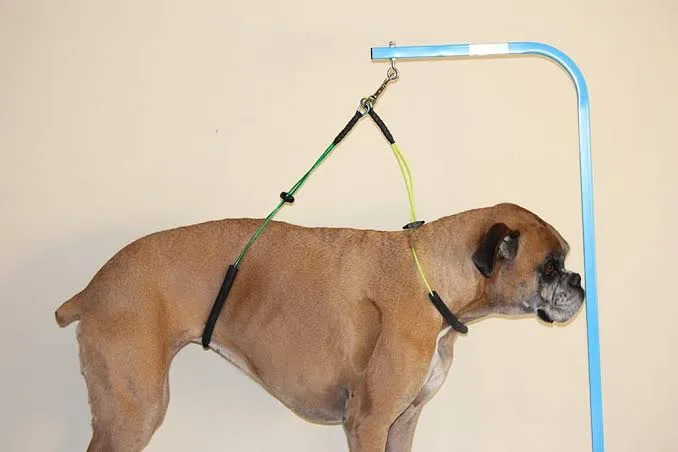
Most well-behaved dogs only need a single, properly fitted grooming loop secured around the neck or chest. For sensitive or reactive pups, we often route that loop cross-body to limit twisting without restricting breathing. In particularly delicate cases, a veterinary-style harness like the Trach Saver provides gentle overhead support while still allowing the dog to stand and shift their weight naturally.

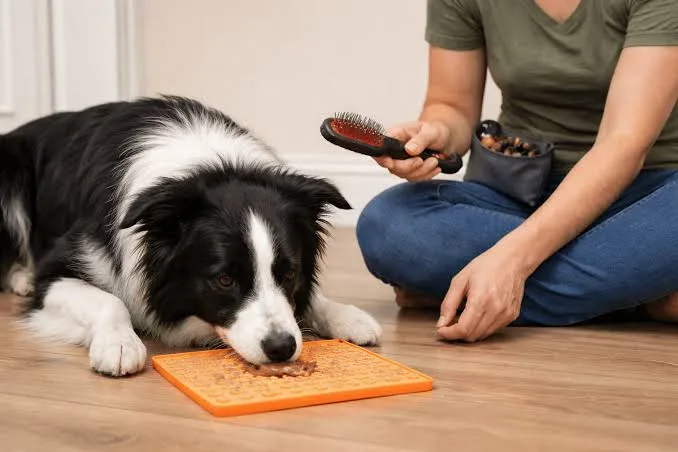
Beyond equipment, the most reliable safety tool is a second pair of hands. Rather than adding another strap, we assign someone to hold, steady, and verbally comfort the dog while the groomer works. This human helper can read body language in real time, pause the moment tension rises, and adjust their position as the dog moves. It takes more coordination, but it keeps the experience trust-based instead of force-based.

What Dog Owners Should Know About Grooming Restraint Safety

Double-head loops and belly bands are among the most widely used yet most risky restraint tools in the industry. When tightened incorrectly or left unmonitored, these devices can compress the throat, restrict airflow, or put dangerous pressure on the spine. Dogs that twist, roll, or thrash against multiple anchor points can suffer serious internal injuries within minutes.

Tragically, there are documented cases of dogs dying from asphyxiation or spinal damage caused by improper restraint use. Even when the intention is safety, a poorly fitted device creates a false sense of security while quietly endangering the animal. Owners should feel empowered to ask exactly what restraint a groomer uses and under what conditions it would be released.

A confident groomer will never take offense when you ask about their restraint policy. In fact, clear communication is a sign of professionalism. Ask whether they rely on single loops, cross-body setups, or full-body harnesses, and whether they use human handlers instead of additional straps. Watch for red flags like rigid policies, reluctance to explain their method, or a history of using muzzles and belly bands as standard practice.

If a dog does need a soft muzzle or protective gloves to keep everyone safe, those should be temporary, clearly explained, and removed the moment the situation stabilizes. The goal is always calm cooperation, not forced stillness. When you know what dog owners should know about grooming restraint safety, you can choose a salon that prioritizes your dog’s physical well-being and mental comfort over speed.

FAQ

Frequently asked questions

Are grooming restraints necessary for every dog?

No. A well-fitted single grooming loop is usually enough for a calm dog, and many dogs need no restraint beyond a groomer’s steady hands. Additional straps like belly bands or double-head loops should only be considered in rare cases, and even then, they must be monitored constantly and released at the first sign of distress. That keeps what dog owners should know about grooming restraint safety tied to a real home-care routine instead of guesswork.

What should I do if my dog is terrified of the grooming table?

Tell your groomer upfront and ask if they can accommodate a slower pace, frequent breaks, or a human handler for comfort. Avoid salons that respond by adding more restraints; the right approach is desensitization, positive reinforcement, and switching to a method that lets your dog retain some control. For what dog owners should know about grooming restraint safety, the safer version is usually the one that leaves less cleanup and less stress afterward.

How can I tell if a grooming salon uses restraints safely?

Look for transparent policies, single-loop or harness-based setups, and staff who prioritize calm handling over speed. A reputable salon will gladly explain their restraint practices, demonstrate how they release a dog if it becomes distressed, and never hide straps or devices out of sight during the groom. For what dog owners should know about grooming restraint safety, the safer version is usually the one that leaves less cleanup and less stress afterward.

Sponsored