Why Does My Dog Fight Bath Time?

Groomingdales guide

Why Does My Dog Fight Bath Time?

Help owners figure out why a dog fights bath time, reduce the most common triggers, and choose the next step that keeps the dog safe instead of escalating the struggle.

Published June 9, 2026

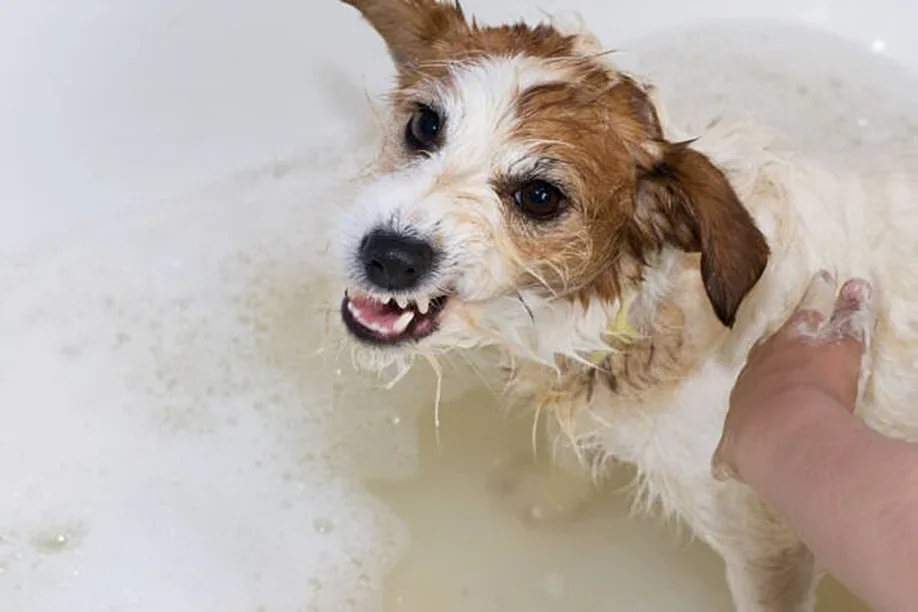
A dog that scrambles, freezes, or tries to bolt during a bath is usually reacting to stress, not trying to be difficult. From the dog's point of view, the tub may feel slick, noisy, cramped, and full of strong smells all at once.

The useful question is not how to hold the dog still longer. It is which part of the setup is pushing the panic: the footing, the sound of running water, the shampoo, a rushed first soak, or a bad memory from earlier baths.

Why Your Dog HATES Baths (and How to Fix It)

Want to know how to give yourdogthe perfectbath? In this video, you'll learn the step-by-step process to bathe yourdogat home ...

  • Channel: Zak George’s Dog Training Revolution

Video source: Zak George’s Dog Training Revolution

Quick read

Key takeaways

  • Build the grooming routine around the jobs that most often cause discomfort or buildup, not around a perfect all-at-once schedule.
  • Use tools that are gentle enough to repeat regularly and simple enough to keep within reach.
  • When a basic home routine stops working, treat that as a clue to inspect the skin, coat, or nails more closely instead of cleaning harder.

Figure out which trigger shows up first

Not every dog hates the same part of the bath. One dog panics as soon as the paws touch a slick tub. Another stays calm until the sprayer turns on or the shampoo smell hits. Watching that first trigger matters because it tells you what to change first.

If you skip that step, it is easy to blame the whole bath when the real problem is one specific sensation or movement that keeps repeating.

  • Watch whether the dog reacts first to the tub surface, the water, the smell, or the restraint.
  • Notice if the dog is worse when lifted in quickly or when water hits the head too soon.
  • Fix the first trigger before you start adding more products or more force.
Why Does My Dog Fight Bath Time?

Make the bath area feel steady and predictable

A slick tub can make even a calm dog feel like it is losing balance. Add that to echoing sound and splashing water, and many dogs start bracing before the wash even begins.

A non-slip mat, a lower-noise rinse method, and a short predictable order can make the space feel less chaotic. Dogs often do better when they know what happens next and can keep their feet under them.

  • Use a non-slip mat or towel under the feet so the dog can brace safely.
  • Wet the body gradually instead of blasting the face first.
  • Keep tools within reach so the bath stays short and orderly.
Why Does My Dog Fight Bath Time?
Sponsored

Use calmer products and shorter sessions while you rebuild tolerance

Strong fragrance, long soaking, and too much rubbing can make an already tense dog hit the limit fast. During a reset phase, aim for the simplest dog-safe products and the quickest routine that still gets the coat clean enough.

The point is not to create a perfect spa day on the first try. The point is to give the dog repeated baths that feel manageable, so the next session starts with less dread than the last one.

  • Choose a lightly scented or unscented dog shampoo when smell seems to be part of the problem.
  • Keep early retraining baths short instead of trying to do every extra grooming task at once.
  • Reward calm pauses so the dog learns the bath can slow down instead of only escalating.
Why Does My Dog Fight Bath Time?

Know when to stop and bring in a professional

Some dogs move past ordinary stress and into full panic, thrashing hard enough to slip, choke on restraint, or hurt a person trying to help. Others may have pain around the ears, skin, joints, or nails that makes bath handling worse than it looks.

is when the goal changes from finishing the bath to keeping everyone safe. A groomer can help with handling strategy, and a vet should step in if the reaction looks painful, sudden, or extreme.

  • Stop if the dog is frantic enough to slip, bite, or cannot catch a calm breath between steps.
  • Call the vet if bath resistance suddenly appears alongside skin pain, ear trouble, or touch sensitivity.
  • Ask a groomer for handling help when the dog needs a calmer setup than you can safely manage at home.

FAQ

Frequently asked questions

Why does my dog act scared before the water even starts?

Many dogs react to the whole setup, not just the water. The tub surface, the room echo, the smell of products, or being lifted into place can all trigger stress before the rinse begins. On why does my dog fight bath time, start by checking the routine before assuming the problem came out of nowhere.

Will more baths make my dog get used to it faster?

Only if the baths feel safer than the old routine. Repeating the same slippery, noisy struggle usually teaches the dog to expect another bad session, not to relax. That keeps why does my dog fight bath time tied to a real home-care routine instead of guesswork.

When should I stop trying to bathe my dog at home?

Stop when the dog becomes unsafe to handle, seems painful, or panics so hard that the bath turns into a fight. That is the point to ask a groomer or vet for the next step. On why does my dog fight bath time, that timing works best when you act before buildup becomes obvious.